
Temporarily closed: The church is currently closed. We recommend confirming before your visit: call the Tourist Info Onda (964 602 855) or check with Onda Town Hall.
The first church of Christian Onda
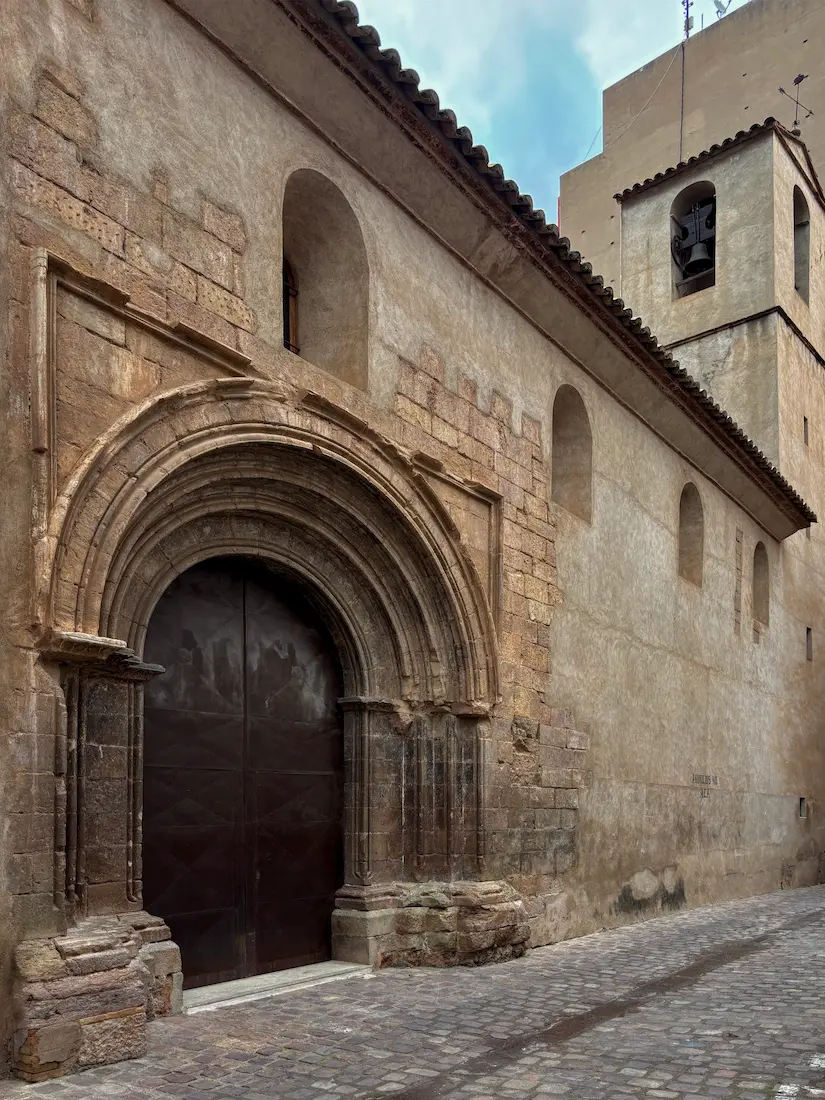
When King Jaume I conquered Onda in 1241, one of his first decisions was to establish a place of Christian worship within the reconquered town. The Church of the Blood, also known as Santa Margarita, was that first sacred space: the oldest surviving Christian building in Onda, built during the 13th century and into the early 14th century on the urban fabric of the medieval town.
Unlike the Church of the Assumption, which was built later and grew to become the main parish church, the Church of the Blood retains a more contained scale, closer to the original building from the conquest period. That makes it particularly valuable: it is not the largest or most visible church, but it is the one that most directly connects with the earliest years of Christian Onda.
Within a perimeter of two hundred metres surrounding this church, the Jewish quarter, the Moorish quarter and the Christian town coexisted for centuries. Three communities, three neighbourhoods, one shared urban space.
Architecture: a transition between two worlds
The building reflects the style of Romanesque transitioning to Gothic, a feature common in churches built in the first generation of the Valencian conquest. The 13th-century builders still used the language of late Romanesque (semicircular arches, solid walls, robust proportions), but already incorporated elements of the emerging Gothic arriving from the north: pointed arches, a greater sense of verticality, a different treatment of light.
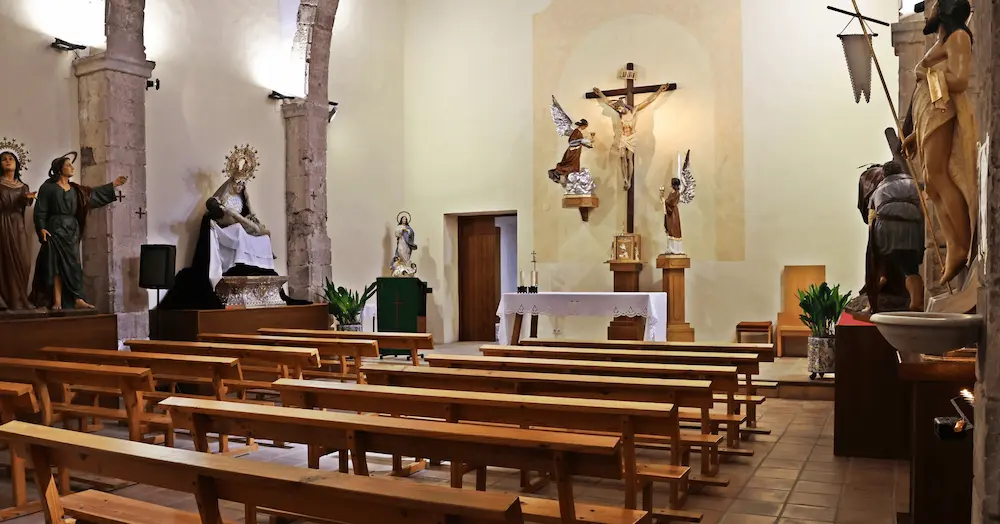
What sets the Church of the Blood apart from other churches of its era is its artesonado (Mudejar coffered ceiling). The carved wooden ceiling decorated with geometric and vegetal motifs is a reminder that the craftsmen who worked in Onda were not exclusively of European Christian tradition: Mudejar artisans, who had remained in the territory under the new Christian administration, brought their techniques and decorative vocabulary to the service of the new religious architecture. The result is an interior where structural Gothic and Islamic ornamentation coexist.
More than a church: the seat of local government
For much of the Middle Ages, the Church of the Blood served a function that seems counterintuitive today: it was also the place where the Consell de la Vila (the local governing body) met. This dual function, religious and civic, was common in medieval Valencian towns, where the space of the main or oldest church served as a solemn setting for acts of government when no dedicated municipal building yet existed.
Over time, that civic function moved to other spaces (the almudín, the medieval granary, first; the Casa de la Vila, the town hall, later), but the church retained its role as a historical reference point in the old town. Today it is one of the most prominent religious buildings in the complex declared BIC (Listed Heritage Site) in 1967.
How to visit
The church is located in the historic quarter of Onda, within the medieval Christian town. The exterior can be seen at any time. To visit the interior it is best to check current opening hours at the Tourist Info Onda (C/ Ceramista Peyro s/n, tel. 964 602 855), as opening times depend on the season and scheduled religious events.
The visit fits naturally into a walk around the historic quarter: from the Plaza de la Sinagoga and the Moorish quarter (Barrio de la Moreria), this church is part of the same route that traces the footprint of Onda's three medieval communities within a very compact area.