
Walk through any city in Europe, the Middle East or Latin America and look at the floor. Chances are those tiles came from the province of Castellón. Onda, Vila-real and l'Alcora account for a large share of production, along with other factories spread across the region, together forming one of the world's leading clusters for floor and wall tiles: exports to more than 180 countries and, in some years, around a quarter of international trade in the sector.
But Onda did not arrive here by accident or overnight. Ceramics have been made here for thousands of years. The earliest material evidence consists of Neolithic pottery remains; far more abundant are those from the Iberian period, though fewer from the Roman and Visigothic eras, before growing again in the Islamic period from the 10th century onward, and far more intensely in later periods, up to the industrial leap of the 19th century — always thanks to something basic already present in the place: the clay beneath the soil, the waters of the Sonella river, and a craft knowledge passed from generation to generation.
Thousands of years of ceramics
The ceramic history of Onda begins before there was an "Onda" as a Christian city. During the Islamic period, between the 10th and 13th centuries, craftsmen in the medina were already producing glazed ceramics using techniques inherited from Al-Andalus. Moreover, archaeologists have found around the castle and throughout the municipal area remains of kilns and ceramic production going back not only to the Visigothic, Roman and Iberian periods, but much further still, to Neolithic times — confirming sustained, necessary activity over many centuries.
The Christian conquest of Onda in 1241 and the founding charter of 1248 did not erase that legacy. The workshops kept going, first with Muslim production and later as a settled artisan trade, the earliest known potter being García Cantavella, around 1375.
The transition from the old workshops to modern factories, to generate more intensive industrial output, began in the late 18th century with the establishment of Miguel Guinot's factory, and in the early 19th century with that of the Peris family, which from 1827 became known as La Campana. These enterprises turned Onda into a leading production centre for the surrounding region, and as success grew — above all through tile manufacture — the number of factories increased progressively.
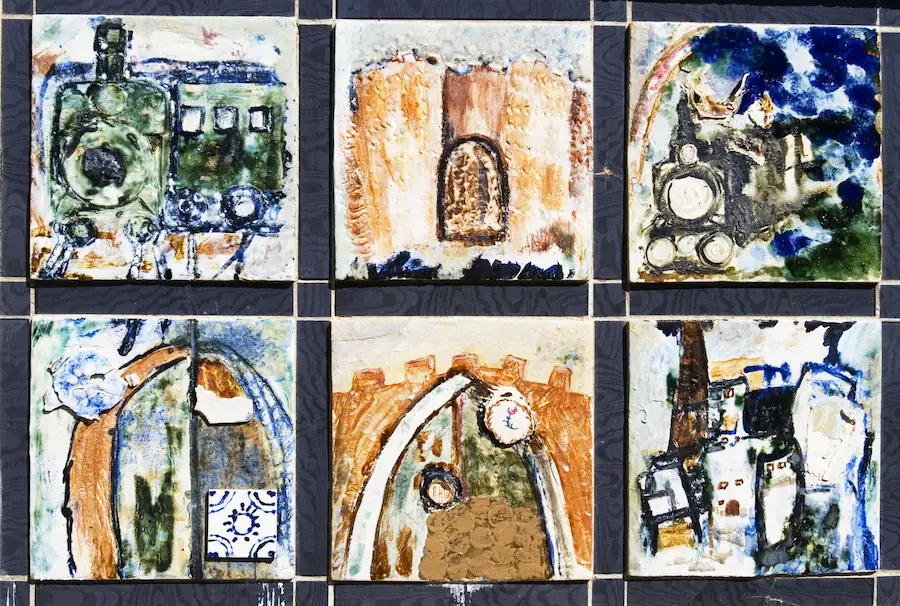
In the second half of the 19th century, larger kilns began replacing artisan workshops. The new industrial techniques transformed the trade for good. Demand for tiles to feed the urban expansion of the period drove output sharply upward. By 1900, Onda was one of Spain's leading tile-producing centres.
If we were to sketch a simple outline of this intense evolutionary process, setting aside the earliest periods, it would look like this:
- 10th–13th centuries Islamic ceramics Glazed workshops in the medina. First documented kilns near the castle.
- 14th–18th centuries Mudéjar and Christian craft tradition Medieval tile workshops, undecorated fired clay flooring, and above all earthenware for domestic use.
- First half of the 19th century Polychrome loza of Onda Expansion of earlier production lines and development of a polychrome domestic earthenware with a distinctive Onda style, now recognised for its originality.
- Second half of the 19th century The industrial leap Larger kilns, semi-industrial production. The process consolidates in the final third of the century, with factories dedicated almost exclusively to tile production in its many variants.
- 1900–1950 Capital of Spanish tiles Onda becomes the tile capital of Spain, supplying the entire nation, including major works of civic architecture, most notably its use in the trencadís technique on Antoni Gaudí's Modernista buildings in Barcelona.
- 1960–1990 Export boom An export boom, full mechanisation, automation and entry into international markets. The La Plana ceramic cluster takes shape.
- Today Global benchmark Onda is a global benchmark, with exports to more than 180 countries; leading factories in R&D for advanced surfaces and materials.
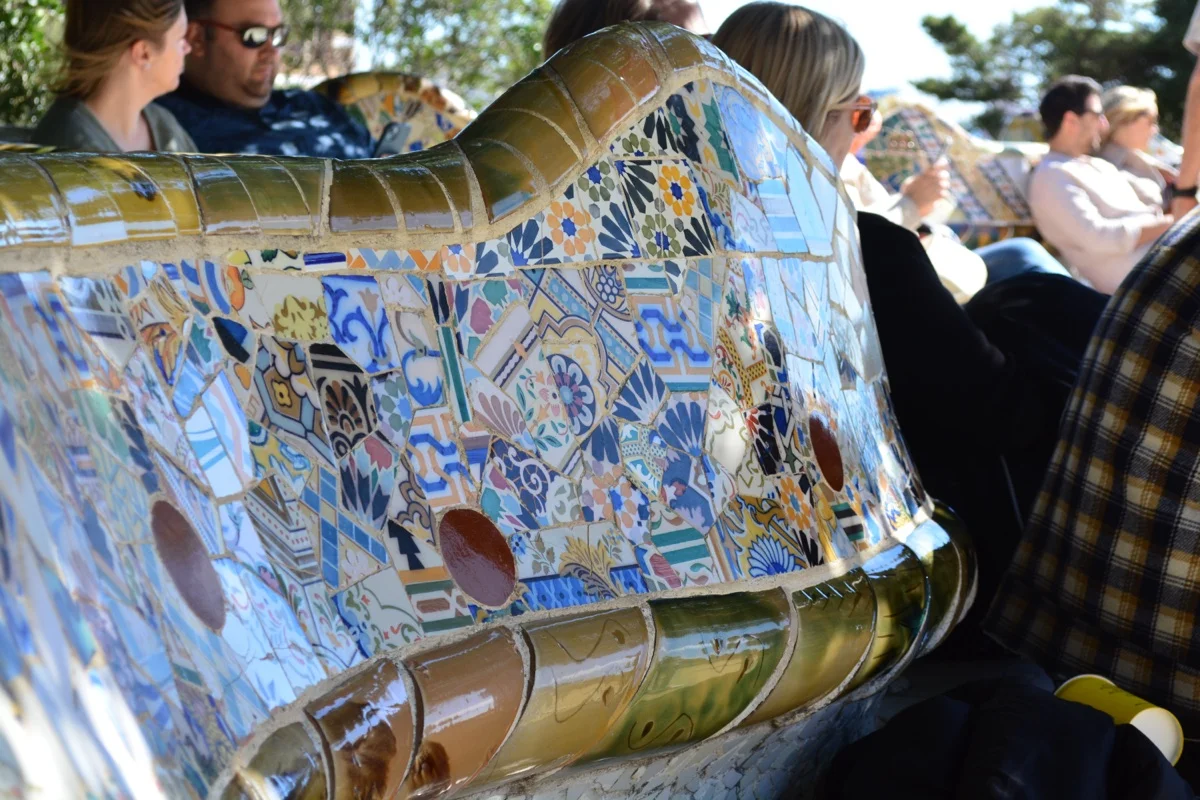
The architect Antoni Gaudí was one of the great users of ceramic tile from this region. The trencadís technique that covers Parc Güell in Barcelona, with tens of thousands of glazed ceramic fragments assembled like a mosaic, drew on materials produced in La Plana and other Catalan factories, with notable presence of Onda tiles in various claddings. Onda and its surroundings did not merely floor buildings: they also clad some of the most iconic facades in Spanish Modernista architecture.
An industry with worldwide reach
The comarca of La Plana (covering Onda, Castellón, Vila-real, Almassora and neighbouring municipalities) concentrates exports to more than 180 countries and, in some years, around a quarter of international trade in the sector. It is not a single factory or a single company: it is an ecosystem of hundreds of players, from tile and flat surface manufacturers to glaze producers, machinery suppliers and design studios.
In the province of Castellón, the sector directly supports around 15,000 jobs, concentrated in this comarca of La Plana, with thousands more indirectly in logistics, services and the supply chain. ASCER, the institution representing virtually all companies in the sector, publishes the market's annual reference data.
The technical knowledge of the sector does not reside in a single place. It is in the people who have worked in the trade for several generations, in the research centres developing new surfaces, in the workshops that still shape clay by hand.
"Ceramics is not what Onda makes:
it is what Onda is."
A city clad in ceramics
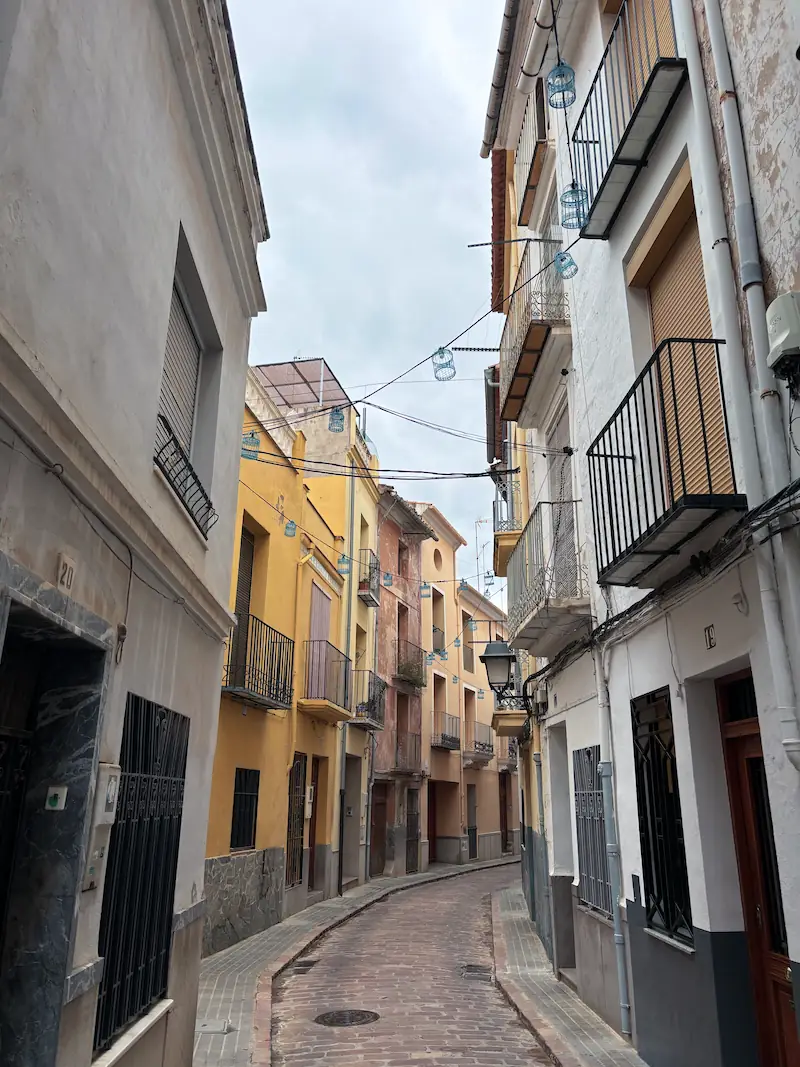
Onda does not only make ceramics for the world: it wears them. Walking through the historic quarter is an unplanned tour through the history of the tile. We see them on the underside of balconies (sotabalcons) in the old town, decorating other parts of facades, numbering buildings, or marking circumstances as curious as fire insurance. They disappeared from most places long ago. Not here.
No museums or explanatory signs are needed. Ceramics appear on facades, in the shrines of saints, on the tiled dados of stairwells and on street name plaques. Every corner turned in the broad historic quarter adds another piece to the tour.
-
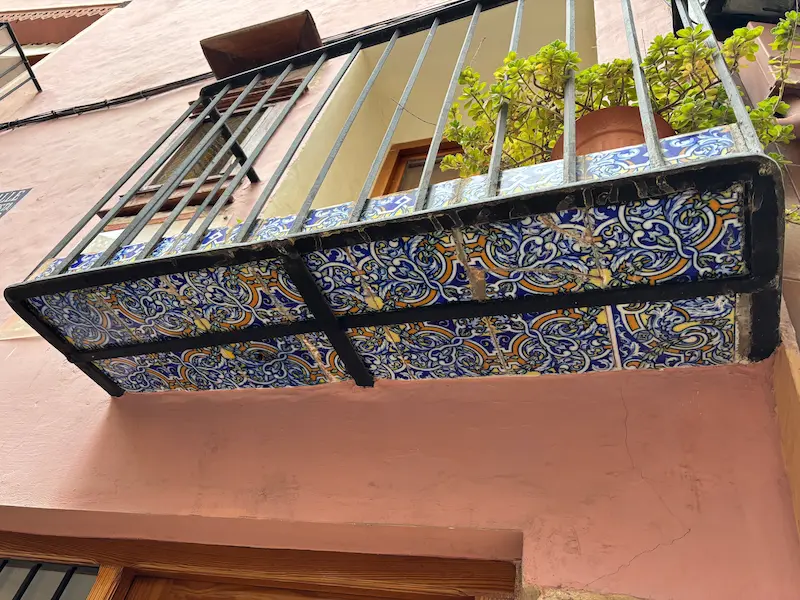 Sotabalcons of the historic quarterWe still find significant historic pieces dating from the 18th century to the early 20th, and some from more recent dates, with floral and geometric motifs typical of local production of the period.
 -
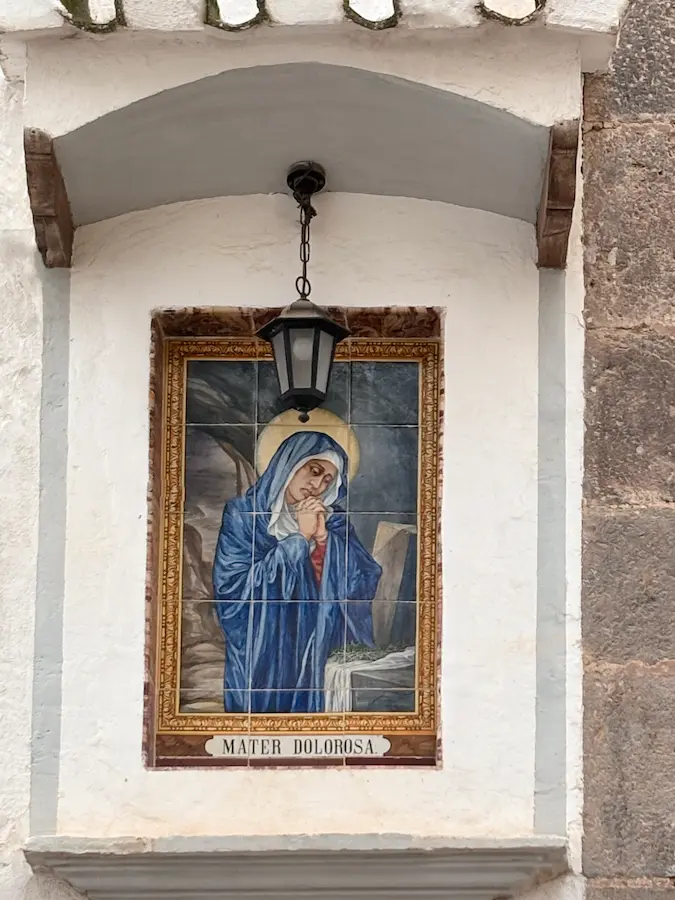 Devotional shrinesScattered through the many streets of the historic quarter, they number more than seventy different works, set within small niches. They are always images of saints framed in hand-painted ceramic retables. Some date to the 18th century, many to the 19th and the rest to the 20th, forming a significant collection of popular art.
 -
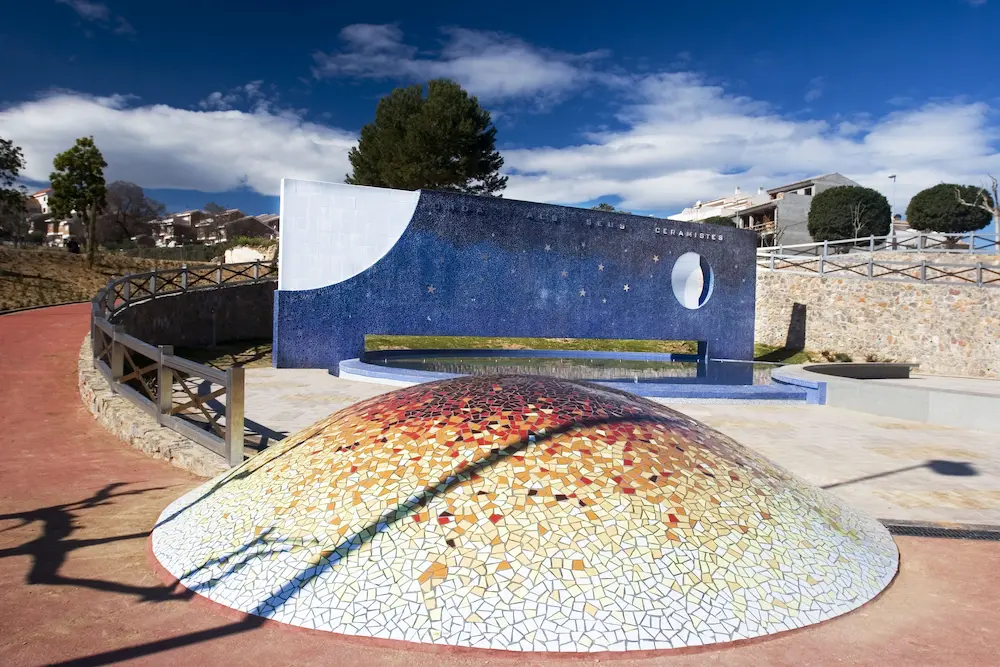 Onda Bonica projectA recent municipal initiative to install artistic ceramic murals on facades and public spaces throughout the town. Contemporary ceramic interventions in dialogue with the historic architecture around them.
 -
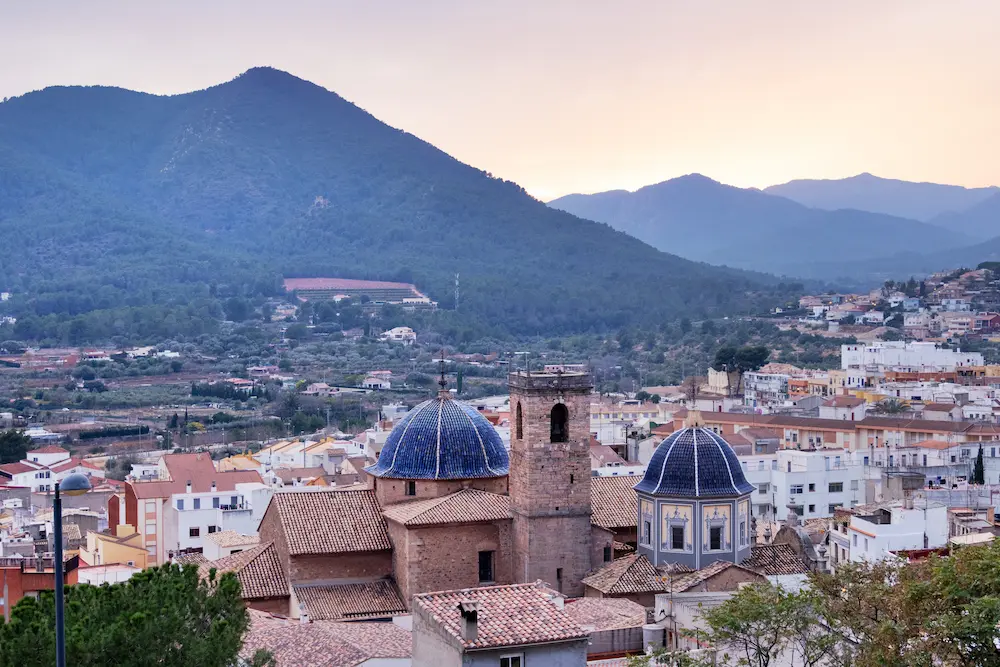 Ceramic domes of the Church of the AssumptionThe two blue and white tile domes crowning the late Baroque 18th-century church are one of Onda's most recognisable landmarks, especially viewed from the castle. The contrast between the church, the fortress and the mountains of the Sierra de Espadán in the background defines one of the city's most familiar views.
The Tile Museum
The Museu del Taulellet in Onda, also known as the Tile Museum, holds more than 30,000 ceramic pieces in a modern building inaugurated in 2004 and designed by architects Helio Piñón and Albert Viaplana. The collection spans ten centuries of production: from medieval Islamic fragments recovered in archaeological excavations to hand-crafted 18th-century tiles, 19th-century industrial output and 20th-century design pieces.
What makes it exceptional is not just the scale but the continuity: you can trace the complete evolution of the tile as an object, a technique and an aesthetic language, all within a single building. Some pieces of local production survive nowhere else in any museum, and a dedicated gallery showcases the tile as a medium for contemporary art, with works by Spanish and international ceramic artists.
Entry is free. The museum rarely appears in mainstream travel guides, which means you are likely to have it almost to yourself, an unusual privilege for a collection of this quality.
Workshops and handmade ceramics
The large factories dominate the landscape, but Onda has another scale of ceramics too: the wheel, the hand-glazing and the gas kiln. There are workshops where the process is still visible and the result tangible.
The figure who best embodies that artisan and artistic dimension is Manolo Safont (1928–2005). Over fifty years he developed a personal language in which traditional technique was a starting point, not an end in itself. His ceramic murals are scattered around the city. The most visible one is on the facade of the Museu del Taulellet and is hard to miss. The museum preserves part of his workshop and bears his name.
Beyond industrial production, Onda has workshops where ceramics are still made by hand: wheel throwing, own glazes, painted tiles and unique pieces. Some have a shop open to walk-ins; others work by commission or appointment.
CeramiTUR is an industrial and craft tourism project linked to the ceramic sector of La Plana and other Spanish ceramic cities. It develops routes and guided experiences across the comarca (including Onda) connecting factories, artisan workshops and museum spaces. Activities include pilot guided visits and a planned Ceramic Route. It is one of the most direct ways to see how ceramic production actually works, with activities covering the complete process from design to finished product.
Visits require advance booking and are generally organised in groups. Some include the opportunity to take part in practical demonstrations at artisan workshops.