
A city built upon a city
Onda is unusual in that its history has not been buried in successive layers: it is visible at the surface, at eye level. Walking through the historic quarter means passing, within a few minutes, from a medieval Islamic district with its characteristic closed lanes to a 15th-century Gothic square with cut-stone arcades, and from there to the square named after the synagogue that stood there six centuries ago.
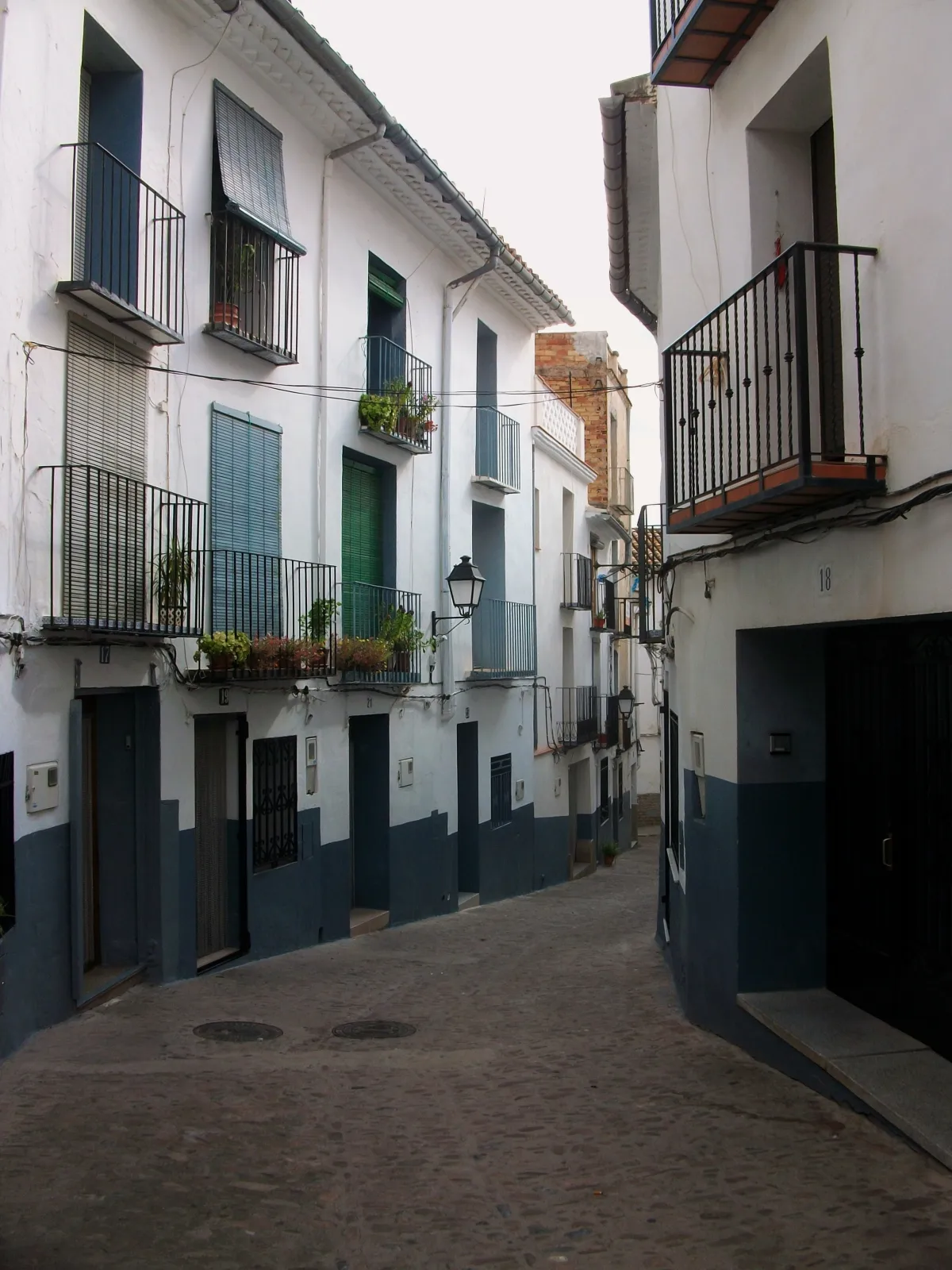
The complex was declared a Historic-Artistic Ensemble in 1967 (Decree 852/1967) and today holds the status of Bien de Interes Cultural (BIC, Spain's highest heritage listing). This is not merely administrative protection: it recognises that Onda preserves, with uncommon urban coherence, the layout of three communities that shared the same space without fully merging: the Christian town within the walls, the Jewish quarter around the present-day Synagogue Square, and the Muslim district (moreria) just beside it, with its self-enclosed street pattern typical of Andalusi urbanism, preserved in very good condition.
According to local tradition, the chronicler Ramon Muntaner described Onda as a city of "ceramic balcony soffits". Seven hundred years later, those painted azulejo (decorative ceramic tile) soffits can still be seen on Carrer Sant Isidre.
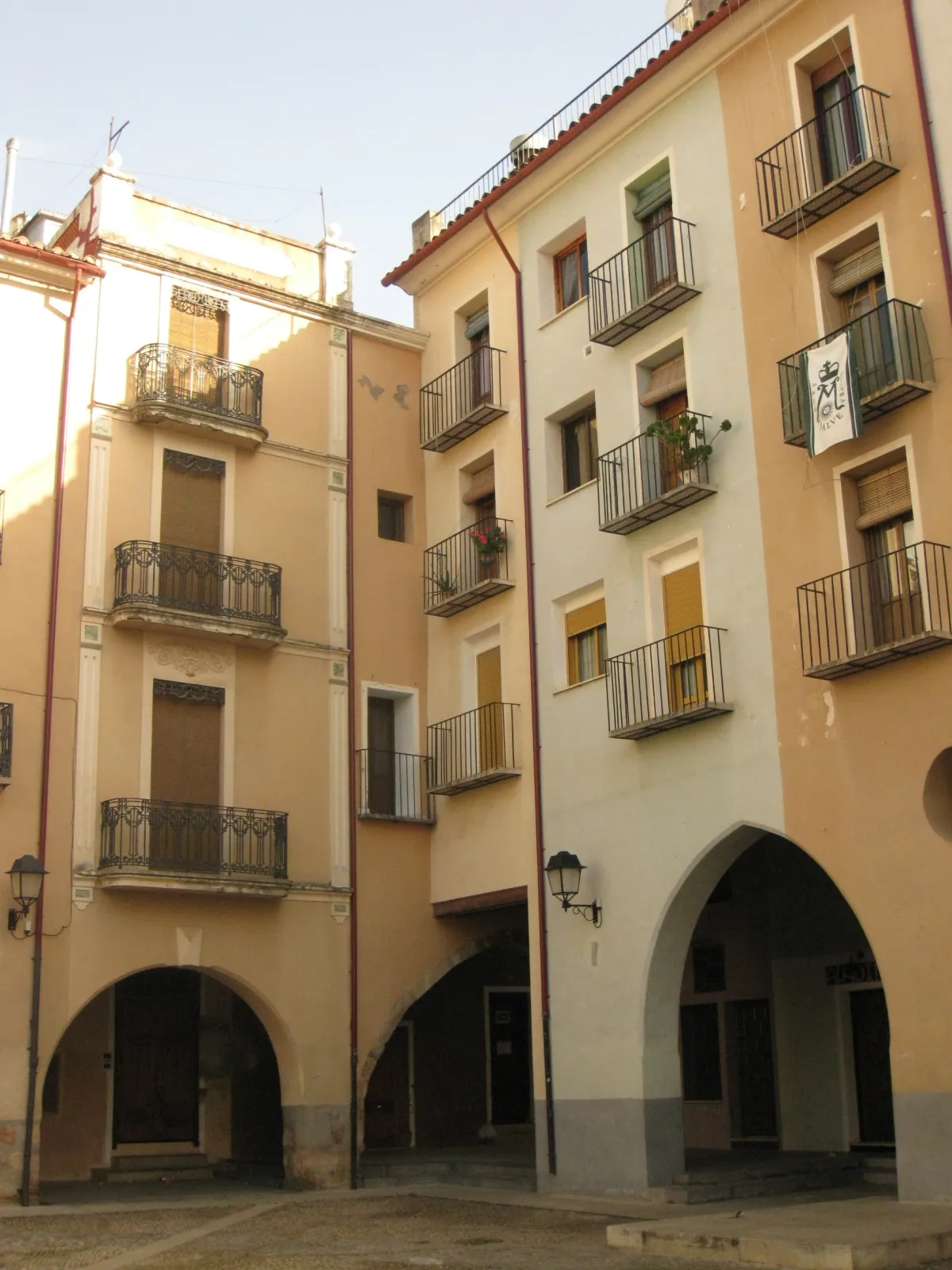
The Almudi Square: commercial heart of the medieval town
The axis of the medieval Christian district was the Almudi Square (Placa de l'Almudi), also known as the Font de Dins. The name comes from Arabic: the almudín was the place where grain was weighed and sold. From at least 1418 until the 19th century it served as the city's main market. The square is rectangular, with 15th-century Gothic arcades in cut stone running along three of its sides. Four gateways originally gave access to the square, three of which still survive.
At the centre stands the covered fountain that gives the square its popular name: Font de Dins. The original fountain was enclosed in 1853 with the structure visible today. One of the square's buildings contains a mid-16th-century Clock Tower with the former prison still visible: the iron grilles and vaulted cell are intact.
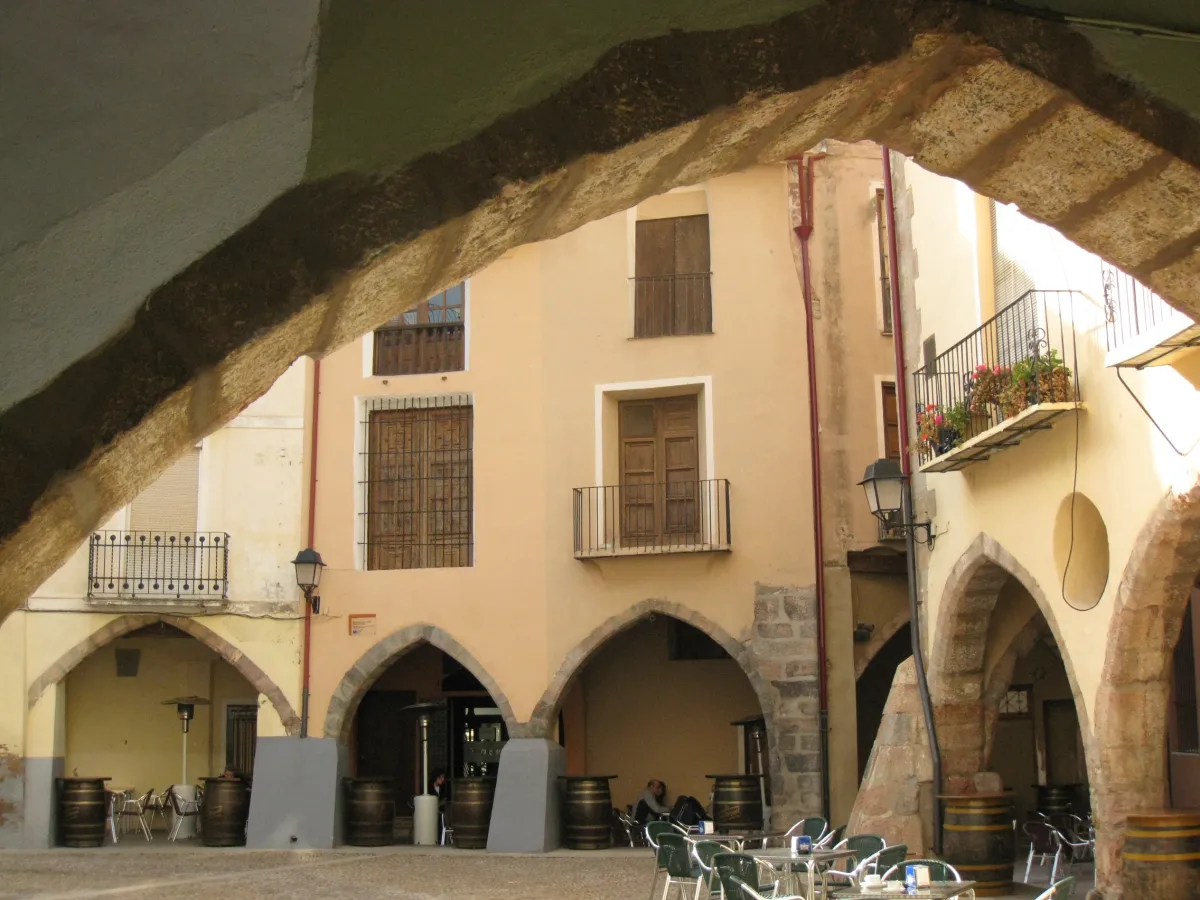
Three cultures in two hundred metres
Behind the Church of the Assumption stands the Font del Sabater (Shoemaker's Fountain), on Carrer de la Verge dels Angels. This is the point where the three medieval districts converged. To the left, the Jewish quarter with the Synagogue Square, where the Jewish community lived until the expulsion of 1492. Ahead, the moreria (Moorish Quarter) with its Islamic street plan of self-enclosed lanes, where the mosque was converted into the Chapel of Sant Vicent Ferrer. At the fountain, a Roman funerary slab reused as building material can be seen, traditionally dated to the 1st century AD.
The Synagogue Square was the hub of the Call, Onda's medieval Jewish quarter. The aljama (Jewish community of the city) was small but is documented until the expulsion of 1492. The synagogue that names the square has disappeared; its exact location is unknown, although tradition places it near what is now the Casa Abadia (Abbot's House). The most tangible surviving feature is the stone doorjamb of the Synagogue Gate, the secondary entrance to the quarter, visible from the Moorish Quarter side. At the south end of the square there was once the Portal de Valencia, the main gateway towards the road to Valencia, associated with an irrigation channel and a flour mill. Both gateways have disappeared.
The three medieval gateways
The medieval town of Onda had three main entrances that structured both the defence of the enclosure and the economic life of its districts. Each gateway controlled a road: the north connected with the mountainous interior, the east with the coastal plain and Castello, and the south with the royal road to Valencia. Anyone arriving in or leaving Onda did so through one of these three openings, and the surrounding districts specialised according to that traffic.
Of the three, only one survives intact to this day.
Portal de Sant Pere (north): At Carrer Sant Pere, nos. 48-52, this is the only fully preserved gateway. It marks the northern end of the enclosure, where the wall turned following the ravine descending from the hilltop. It retains the arch, a Crown of Aragon coat of arms on the keystone, a restoration inscription dated 1578, and traces of the original hinges. An irrigation channel probably ran across the top, supplying the Moli de la Conxa mill.
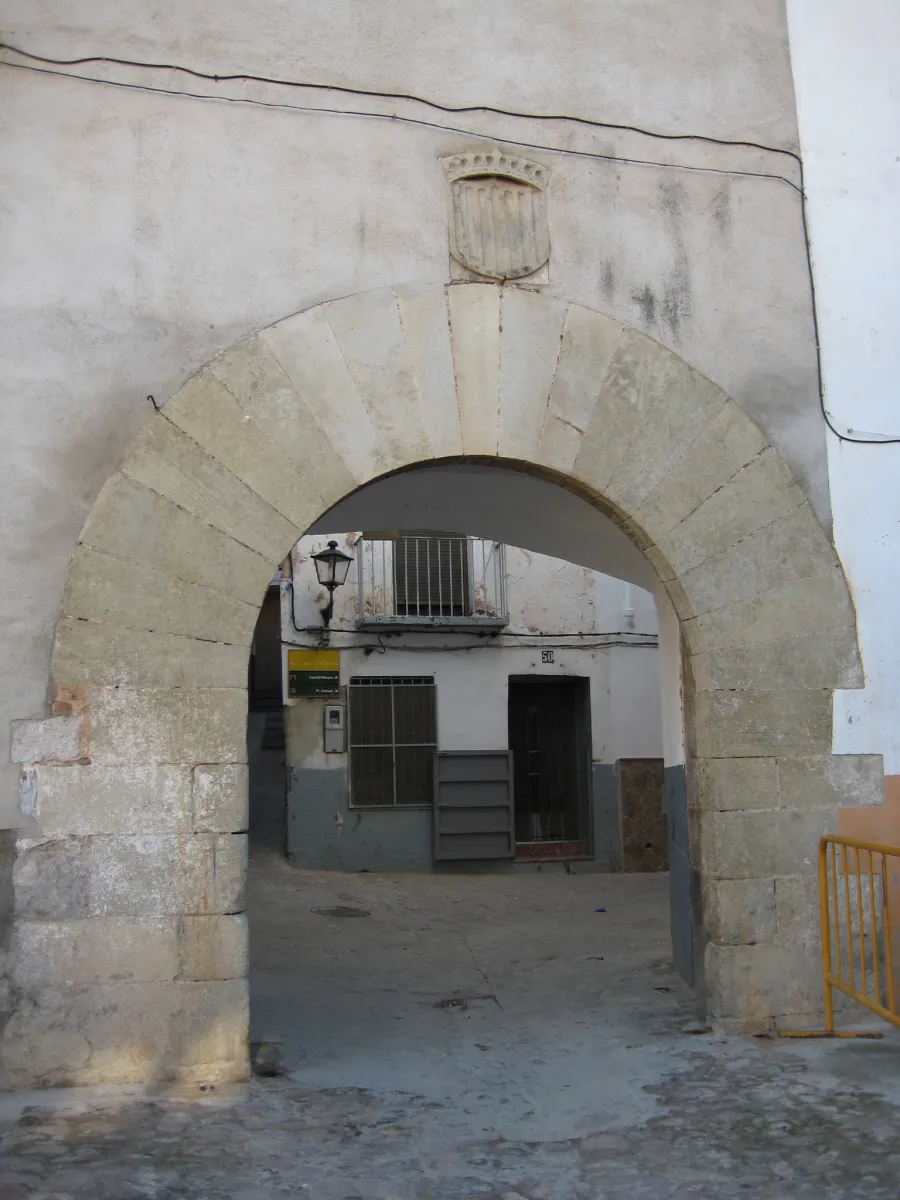
Portal de La Safona / Sant Roc (east): This was the main entrance from the plain and the road towards Castello. The gateway itself has disappeared, but its mark is still visible: the Gothic entrance arch has been absorbed into the facade of a building at the north-west corner of the Almudi Square. To find it, stand at the centre of the square and look towards the far left corner: the stone arch, larger in span than the regular arcades of the Almudi, appears at the corner absorbed by later construction. It goes unnoticed unless you know what you are looking at.
Portal de Valencia (south): The access to the royal road to Valencia, located at the end of the Synagogue Square, next to the main irrigation channel and an old flour mill. No architectural remains survive: it disappeared completely. Its memory lives on in the street layout that still converges at that point and in the name of the road that once started there.
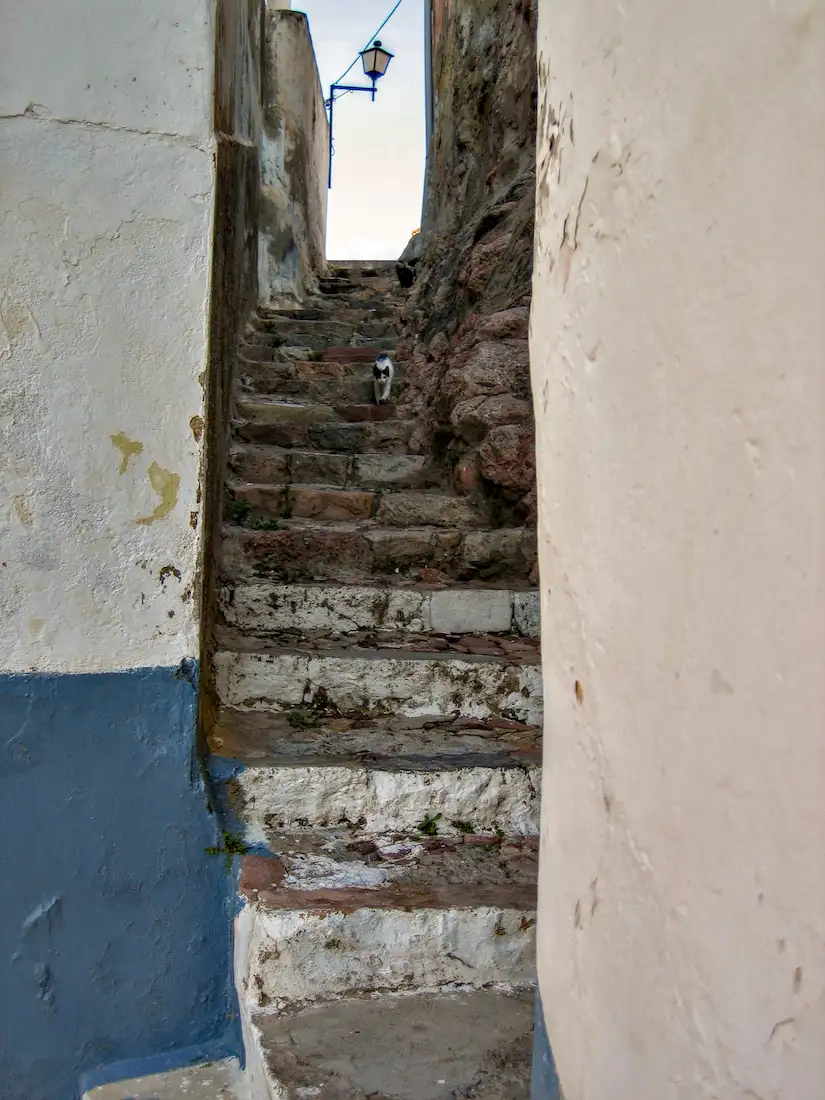
Running parallel to the Islamic wall are the Escaletes dels Gats (Cat Steps), of medieval origin, carved directly into the rock on Carrer Montesa-Magdalena. They were the emergency access used by farmstead dwellers from the surrounding hills to climb up to the castle with their belongings in times of conflict.
The medieval bridge over the Sonella
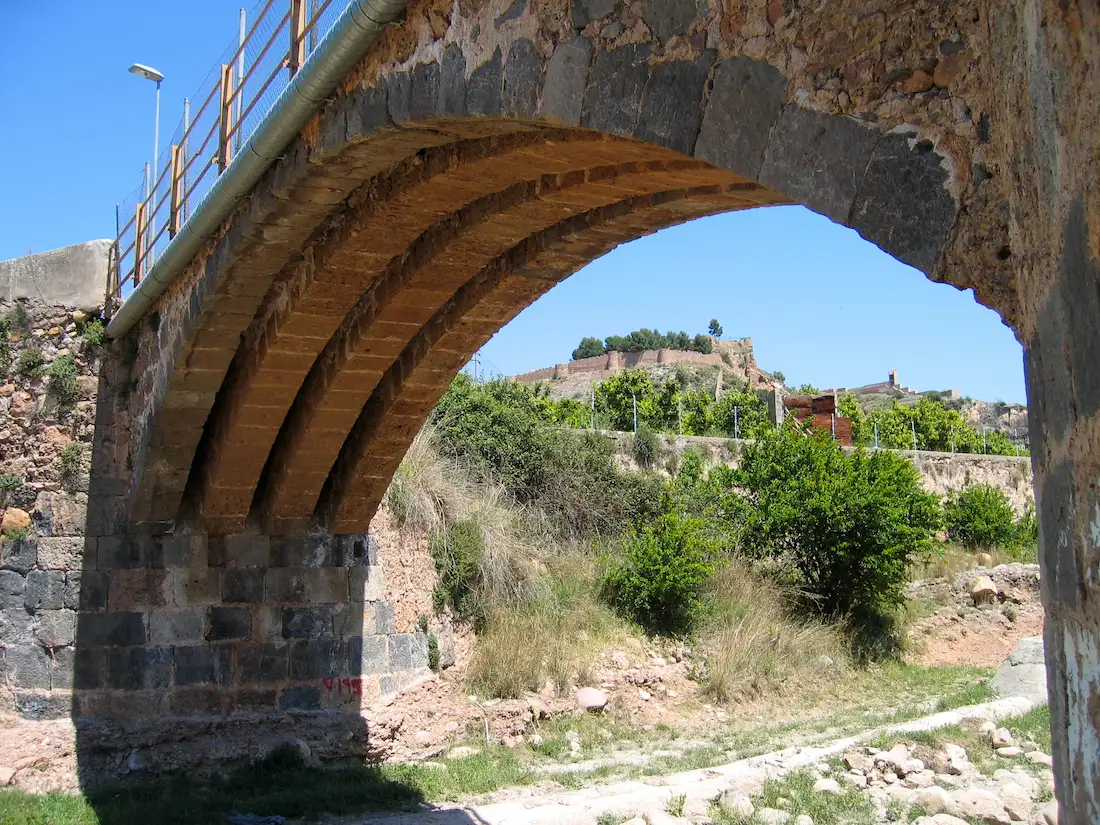
Descending from the historic quarter towards the river, the medieval Sonella bridge is one of Onda's least-visited and most photogenic heritage features. Built in the 16th century in dressed stone, its two pointed arches crossed the historic road to Valencia. From the riverbed, the arch frames the castle hill in the background with a perspective found on no postcard.
Ceramics as an urban language
According to local tradition, the chronicler Ramon Muntaner (1265-1336) described Onda in his Chronicle as a city of "ceramic balcony soffits": the overhangs of houses decorated with painted azulejos (decorative ceramic tiles). On Carrer Sant Isidre the arcades at no. 23 can still be seen with their antique polychrome ceramics. Nos. 3, 4 and 16 retain carved stone doorways dated from the late 15th to early 16th century. No. 3 preserves traces of a fresco dated 1781 bearing the municipal coat of arms: local records indicate it served as the Town Hall.
Throughout the streets of the old town there are also devotional ceramic chapels from the 18th to the 20th century: small niches on facades with hand-painted azulejo retables dedicated to the three local patron saints. They form an open-air ceramic museum that nobody curated, that is simply there.

Suggested route · 12 stops
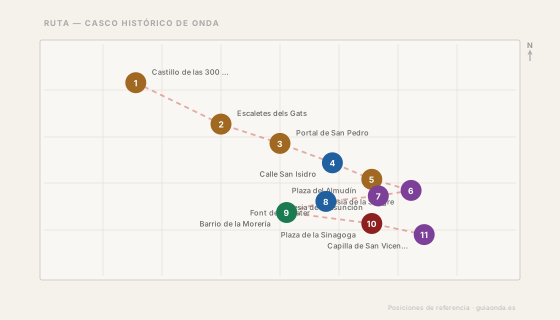
The natural route starts at the Castle and descends diagonally through seven centuries of urban strata: Islamic walls, medieval Christian district, Gothic square, three churches and the junction of the three quarters. At a relaxed pace with stops it takes between one and a half and two hours. The map shows the reference positions of each stop.
Click the markers to see each stop. Positions are for reference. Base map: OpenStreetMap contributors.
Interactive map available at guiaonda.es/en/what-to-see-in-onda/historic-quarter/
-
15 min walk
Castle of 300 Towers
HeritageStarting point and viewpoint. Panoramic view of the historic ensemble and the Plana valley. From here you understand how the medieval city grew down the hillside over seven centuries.
-
23 min walk
Escaletes dels Gats
HeritageMedieval steps carved directly into the rock on Carrer Montesa-Magdalena. They were the emergency access to the castle running parallel to the Islamic wall.
-
34 min walk
Portal de Sant Pere
HeritageOne of the few preserved medieval gateways. Arch with the Crown of Aragon coat of arms on the keystone, a restoration inscription dated 1578, and traces of the original hinges.
-
43 min walk
Carrer Sant Isidre
UrbanCarved stone doorways from the late 15th and early 16th century (nos. 3, 4 and 16). No. 23 still has the ceramic balcony soffits described by Ramon Muntaner in the 14th century. No. 3 served as the Town Hall.
-
52 min walk
Almudi Square · Font de Dins
HeritageHeart of the medieval Christian district. 15th-century Gothic arcades in cut stone. Grain market since 1418. Mid-16th-century Clock Tower with the former prison visible: iron grilles and vaulted cell intact.
-
62 min walk
Church of the Blood
Religious1250, the oldest church in Onda. Single nave with a Mudejar coffered ceiling. Built over the main mosque after the Christian conquest of the 13th century.
-
73 min walk
Church of the Assumption
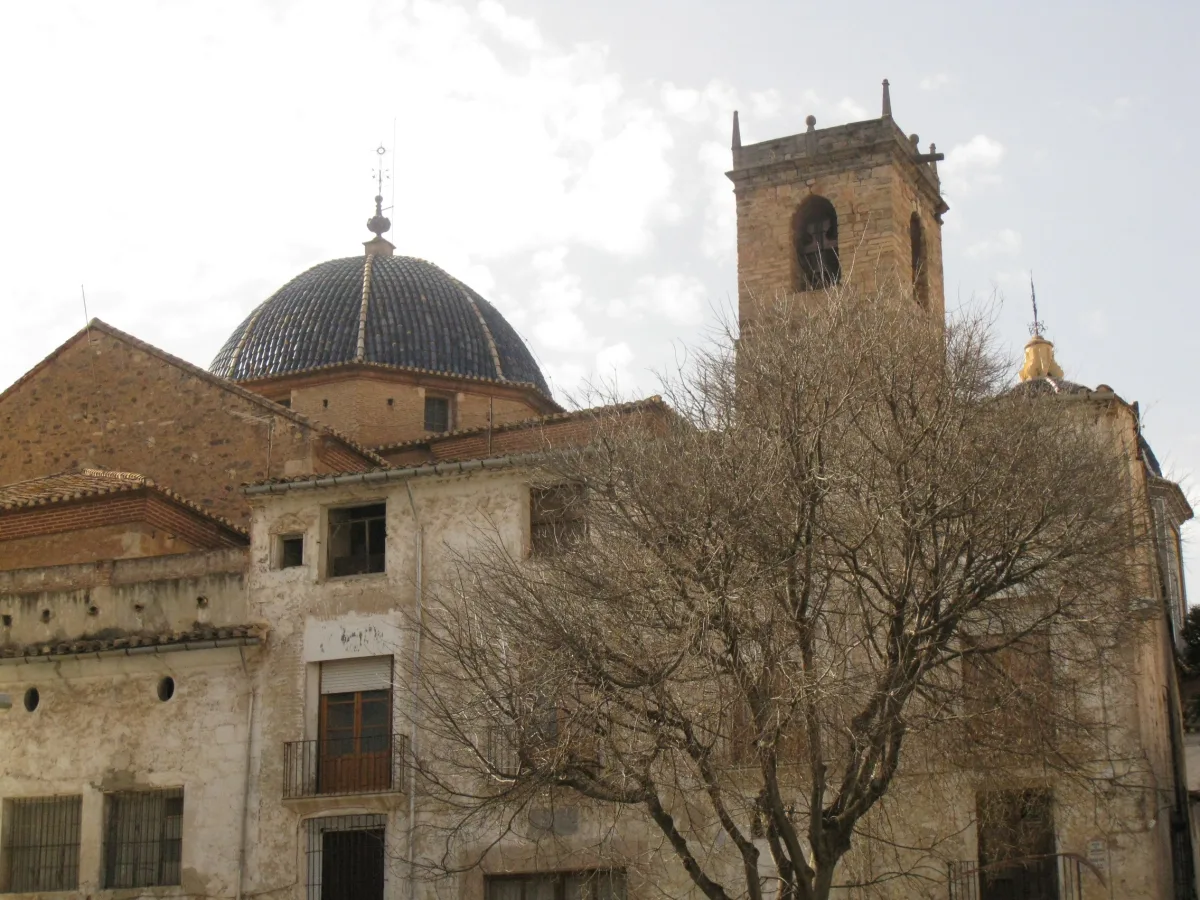
ReligiousBaroque church of 1727 built over a medieval temple. Gothic tower from the 14th century, the only survivor of the fire of 1467. Dome frescoes using Onda residents as models, and a 594-tile mural by Manolo Safont (1954).
-
83 min walk
Font del Sabater
UrbanThe fountain on Carrer de la Verge dels Angels where the three medieval districts converged. Its structure incorporates a Roman funerary slab reused as building material, traditionally dated to the 1st century AD.
-
94 min walk
Moorish Quarter
MoorishThe medieval Islamic district largely retains its self-enclosed lane pattern, characteristic of Andalusi urbanism. The Chapel of Sant Vicent Ferrer was built over the former mosque of the district.
-
105 min walk
Synagogue Square
Jewish quarterThe hub of the Call, Onda's Jewish quarter. The synagogue has disappeared; its exact location is unknown, possibly near the current Casa Abadia. The stone doorjamb of the Synagogue Gate survives, visible from the Moorish Quarter side. The small Jewish community lived here until the expulsion of 1492. At the south end stood the Portal de Valencia, the main gateway towards the road to Valencia.
-
11
Chapel of Sant Vicent Ferrer
ReligiousBlue ceramic dome over the former mosque of the district. Natural end of the walk after passing through three medieval quarters in under two kilometres.