
Onda's mountain
From anywhere in Onda's town centre, Montí appears to the south: that sierra profile some 3 km away that defines the horizon. Anyone looking at it from the Plana will always see that silhouette in the background; anyone leaving the town heading south reaches the start of the climb in minutes. This is not a remote sierra or a mountaineering destination: it is Onda's backyard, the most immediate and most-walked natural space in the area.
Montí borders the Sierra de Espadán Natural Park and shares with it the cork oak woodland, the red sandstone bedrock and the historic paths that for centuries connected Onda with inland villages. The trails are now officially graded by the FEMECV as two short-distance routes: SL-CV 107 (Santa Bàrbara) and SL-CV 142 (Pic de Montí).

The Hermitage of Santa Bàrbara
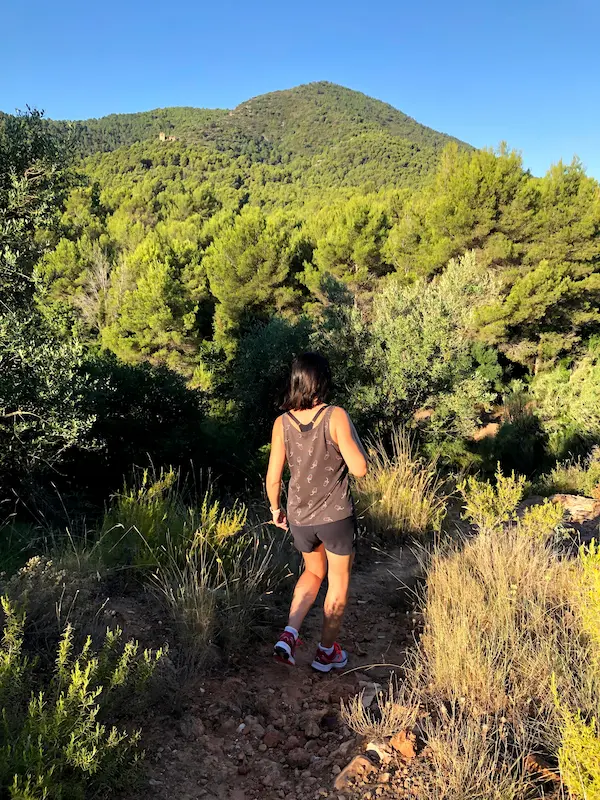
On the northern slope of Montí, with Onda's castle in the foreground and the Plana plain stretching to the sea, stands the hermitage of Santa Bàrbara. It is the most photographed spot on the sierra and the usual destination for half-day family outings. The hermitage itself is simply built (whitewashed, no architectural pretensions) but its setting is exceptional: few hermitages in the interior of Castellón have such a direct prospect over the historic townscape and the coastal plain.
Route SL-CV 107 reaches the hermitage on a circular of 8.6 km and 2h 40 min, starting at the Molí de la Reixa with a modest gain of only +255 m, making it the most accessible option. The path combines the banks of the Riu de Betxí, the cork oak forest on the hillside and a descent through narrow track between aromatic scrub.
Pic de Montí: the demanding summit
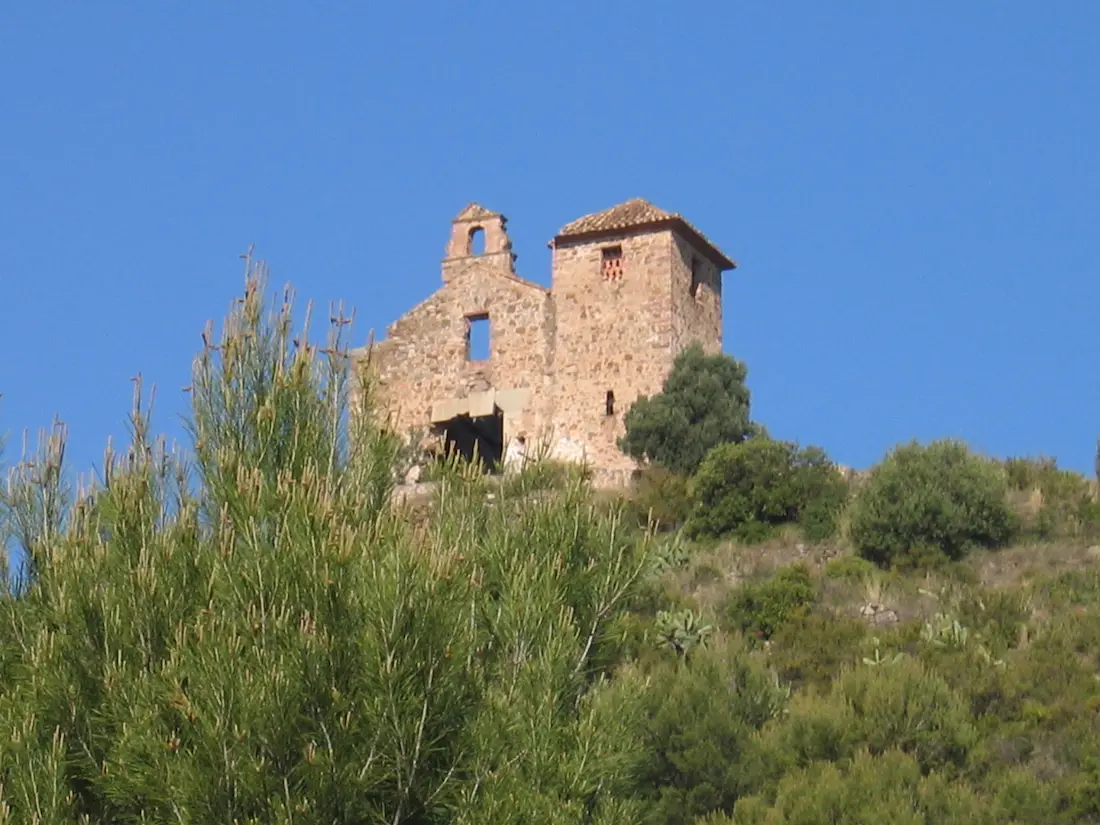
Pic de Montí is reached via SL-CV 142: a circular of 5.6 km and 2h 55 min starting at El Azud with a gain of +525 m, the most demanding of the graded routes in Onda's municipal area. Short in distance but consistently steep, it follows the Camí Vell de Tales, an old cobbled mule track that connected Onda with mountain villages before modern roads existed.
From the summit you get a full 360-degree panorama: the entire Plana Baixa, a grid of orange groves stretching to the blue of the Mediterranean, the sierra villages to the north, and on very clear days, the Columbretes Islands.
Flora, forest and historic paths
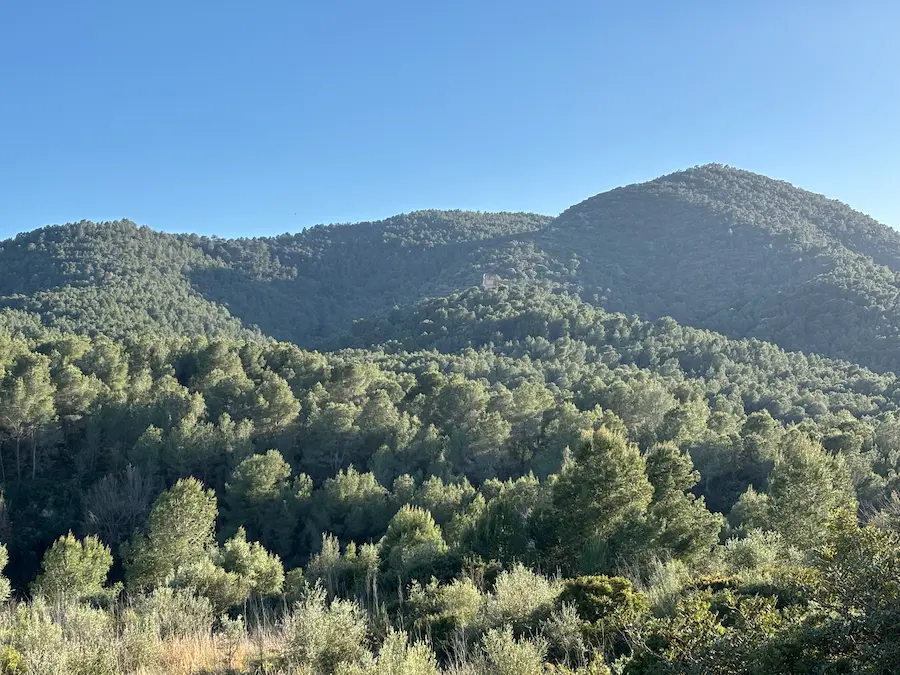
Montí's cork oak woodland is part of the same forest that extends through the Sierra de Espadán. In the middle sections of the climb it is common to find cork oaks with trunks marked by the last cork harvest, an activity that continues to be practised on the sierra in the traditional way. In spring, the woodland floor carpets itself with white rockrose, rosemary and thyme.
The Camí Vell de Tales, followed by the Pic de Montí route, preserves stretches of original sandstone cobbling. This path was for centuries the main road between Onda and the sierra municipalities and remains one of the few historic tracks in the area that retains both its original alignment and its original surface in good condition.
When to go and what to bring
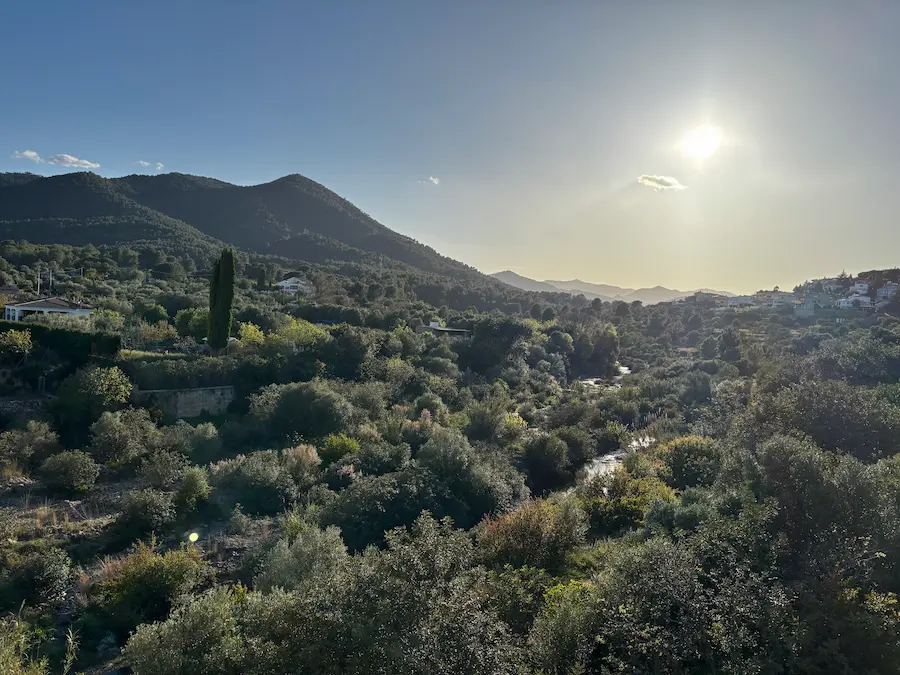
Spring is the best season: flowers, mild temperatures and the forest at its most alive. Autumn works well too. In summer, setting out before 8 am is essential for the Pic route: there is no shade on the final climb and the heat can be intense from midday. On the Santa Bàrbara circular, the cork oak canopy gives more shade and the gain is more manageable.
On both routes there are no reliable water sources along the way (the Font del Retor on SL-CV 142 may be dry in summer). Carrying enough water is non-negotiable. Shoes with grippy soles and sun protection for the exposed sections.