
Five kilometres that Onda walks every summer
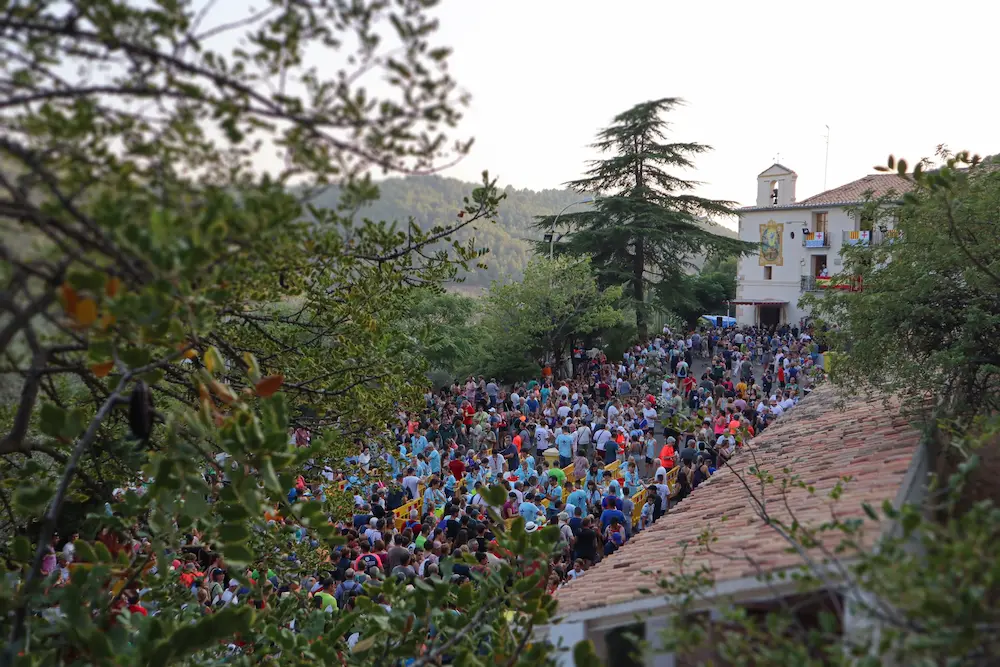
Some places define a town not for what they are but for what they mean to those who live nearby. The Hermitage of El Salvador is that for Onda: a sanctuary that has concentrated the collective memory of its inhabitants for centuries, a point of reference that needs no advertising because it is engraved in the memory of every generation.
The road that leads here leaves Onda in the direction of Fanzara and, about five kilometres on, leaves the urban area behind and climbs gently to the hermitage complex. Whoever visits it for the first time without knowing the context may not fully understand why this place matters so much. Those who know it understand perfectly.
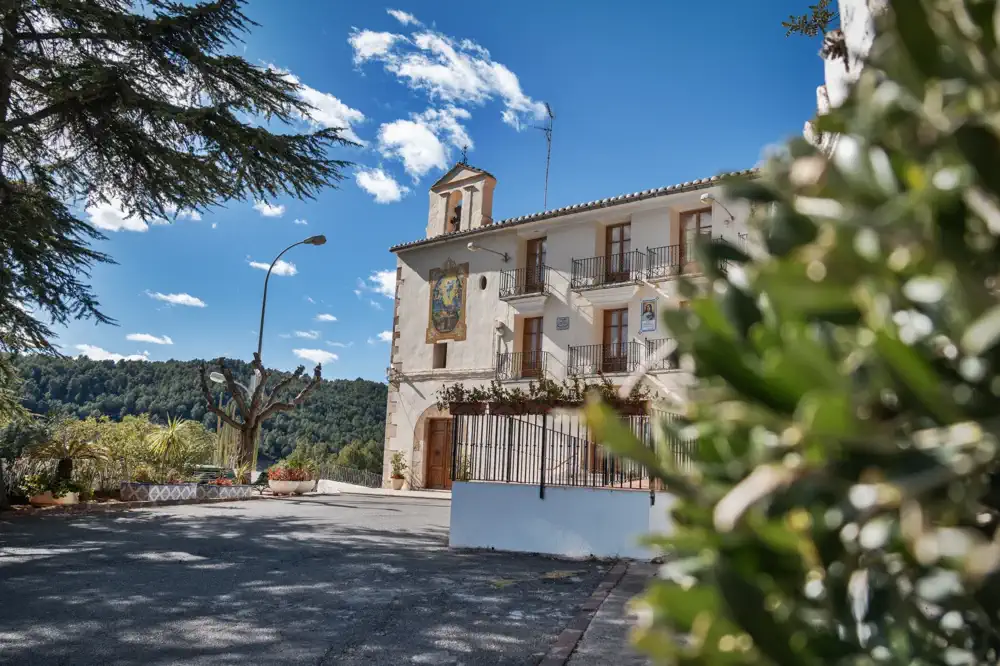
The Vatican declared El Salvador patron saint of Onda in 1906. Before that, the people of Onda had already been venerating him for more than four centuries.
History: from the conquest to the Baroque
Devotion to El Salvador in Onda begins shortly after the Christian conquest of 1241. On the land where the hermitage now stands there was already a small building dedicated to Saint Margaret, which served as a spiritual shelter during the years when the town was being organised under the new administration. As the decades passed, that first oratory gradually ceded its prominence to an image of the Saviour whose presence is documented from the early 15th century.
The original carving, in late Gothic style, was for centuries the axis of local religious life. In 1555, the Valencian painter Joan de Joanes, one of the leading figures of the Renaissance in the Valencian Country, restored the image. That someone of his stature accepted the commission says a great deal about the symbolic weight the sanctuary already carried at that time.
The building that can be visited today is the result of a major restoration begun in 1724, when the complex took on its current Baroque appearance: a Doric-style nave, a gilded wooden altarpiece installed in 1734, and an adjoining guesthouse that completed the complex. The facade bears a ceramic panel by Ismael Mundina depicting the Ascension, an example of Onda's tile-making tradition applied to religious decoration.
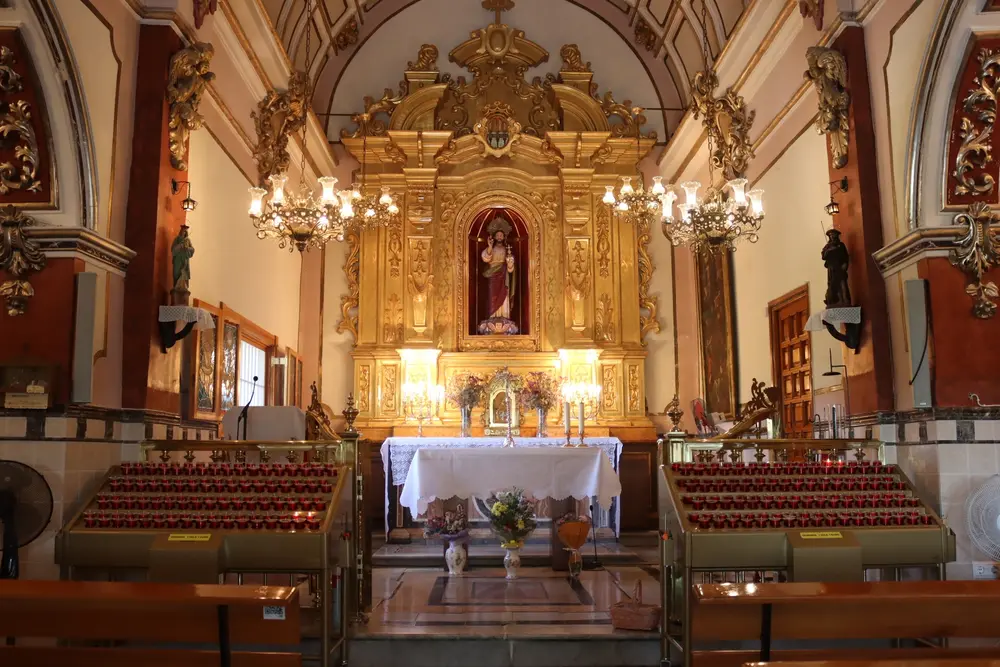
The Spanish Civil War of 1936 caused serious damage: the original image was destroyed, along with much of the interior furnishings. The post-war reconstruction returned a carving faithful to the original to the sanctuary, and this is the one that today presides over the altar. In 2024 the 300th anniversary of the great Baroque restoration was celebrated with cultural events and a special edition of the traditional Hymns to El Salvador.
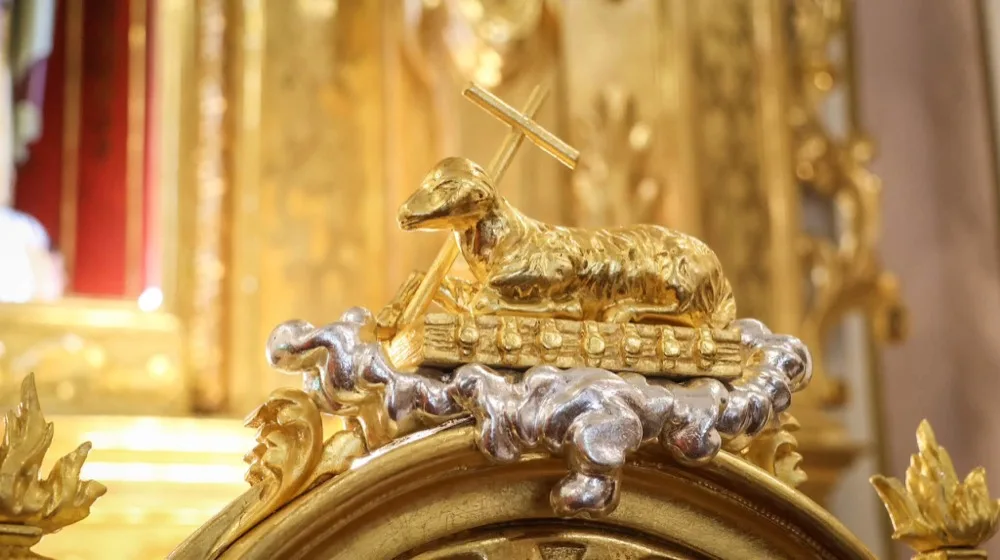
The town council restored the altarpiece's tabernacle in 2026, a gilded piece with detailed carvings such as the Lamb of God crowning its top. The work brought back the original splendour of the goldwork, on display since the 5-6 August festivity.
Eight centuries of history
- Conquest of Onda (1241)
- First hermitage on the site
- First documented references (c. 1400)
- Gothic carving of El Salvador
- Joan de Joanes restores the image (1555)
- Growth of popular devotion
- Major restoration of the complex (1724)
- Gilded altarpiece (1734)
- Adjoining guesthouse
- Patronage declared by the Vatican (1906)
- Image destroyed and reconstructed (1936)
- 300th anniversary of the restoration (2024)
The pilgrimage on 5 August
The great day of El Salvador is the 5th of August. On that day much of Onda makes its way to the hermitage on foot or by car, a solemn mass is held, and the grounds surrounding the sanctuary fill with families spending the day there. On the 5th and 6th of August there are usually cultural activities and traditional music around the hermitage. The town council normally runs a free bus service to make access easier for those without their own vehicle. This is one of those celebrations that needs no explanation for anyone who has grown up in the town: it simply happens every year, as it always has.
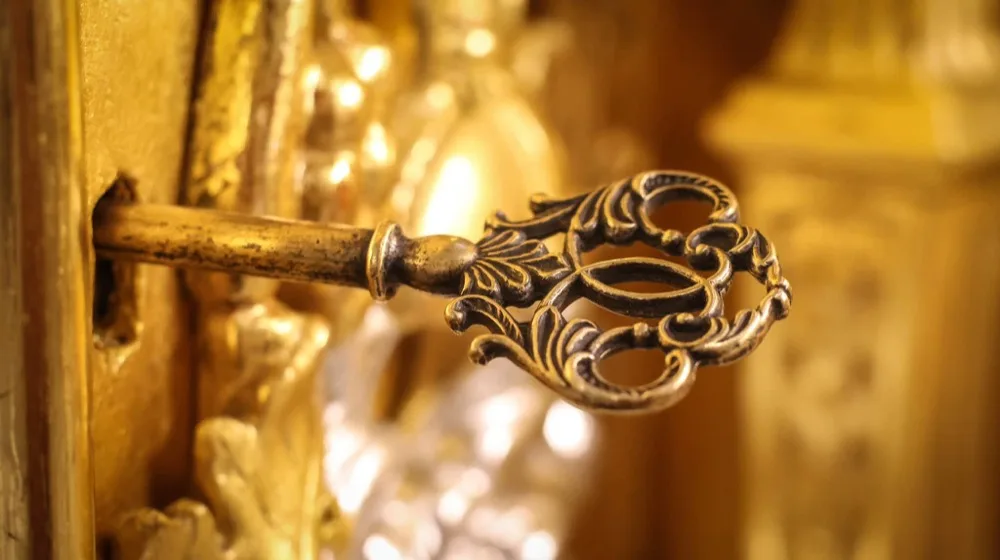
There is another less well-known tradition involving the residents of Fanzara, the nearby municipality. Every first Friday of April (unless it falls on Good Friday), the people of Fanzara walk the six kilometres separating their village from the hermitage. At the boundary between the two municipal areas, representatives of Onda receive them and exchange keys in a ceremonial gesture evoking an ancient bond of brotherhood between the two communities. The day ends with a shared mass and meal.
The surroundings: pine forest, picnic areas and recreation zone
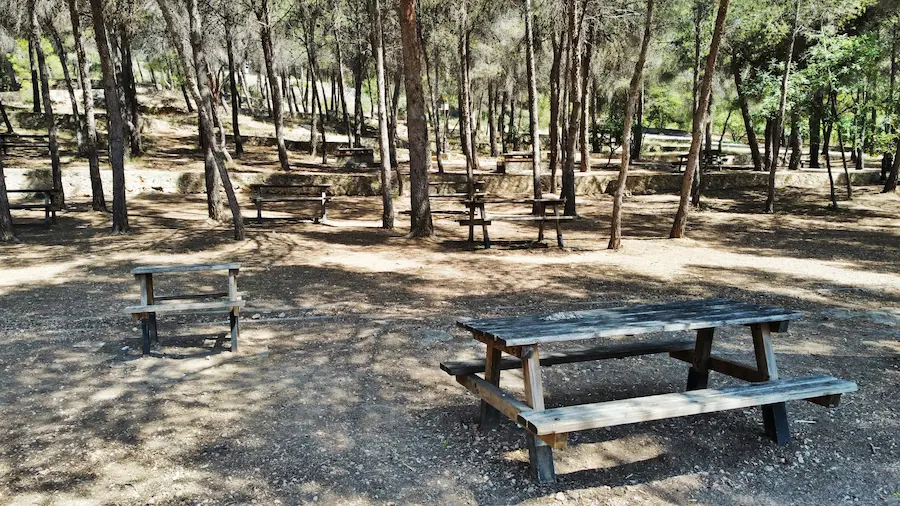
Beyond the hermitage itself, the site of El Salvador is one of the most complete outdoor recreation areas around Onda. The pine forest surrounding the complex has tables and benches set among the trees, with good shade even in the hottest months. The public outdoor grills allow visitors to cook on site, and use is free. It is a typical weekend plan for families from Onda: drive up to El Salvador, claim a grill from first thing in the morning and spend the day in the countryside.
One important practical note: during periods of high forest fire risk, the town council may restrict or ban use of the grills. It is worth checking the alert status before setting out, especially in summer.
Next to the picnic area there is a children's playground with swings and equipment for young children, integrated into the same pine forest. The flat ground around the complex is accessible with a pushchair. Parking is free and has enough capacity except on the main days in August.
Within the complex, the Hermitage Restaurant serves traditional cuisine and paella with terrace seating, for those who prefer not to cook or simply want to round off the day without fuss.
Walks and activities in the pine forest
The grounds around the hermitage have shaded paths through the pines that are completely flat and short, designed for an easy stroll. They are a good option for families with young children who want to walk for a while without the demands of a mountain trail. There is also a natural spring on the site where children usually stop.
For those wanting more, the PR-CV 361 passes directly through the hermitage: this 10.7-km circular route starts from the Molí de la Reixa, climbs to El Salvador and returns via the Camí de Retorn. The stop at the hermitage is the natural rest point halfway through the route, with the option to refill water and take a break at the restaurant.
The town council organises seasonal activities at the site for families. During the Easter holidays, workshops, games and outdoor activities for children are set up in the pine forest under the name "Peque Pasqua". It is one of the few activities in the town that combines a natural setting and a children's programme in the same space.
How to visit the hermitage
Access is free and open. By car, the road leaves Onda in the direction of Fanzara and is signposted as "El Salvador" or "Ermitorio del Salvador". It leads directly to the car park at the complex. For those who prefer to walk from Onda, the journey is about five kilometres along an accessible, undemanding path, with views over the Plana flatlands in the final stretch. The town council usually runs a free bus service for the pilgrimage on 5 August.