
In July and August Peñíscola gets packed: the old town jams up, car parks fill before 10 am and prices rise considerably. If you can choose, plan your visit between September and June.
The castle above the sea
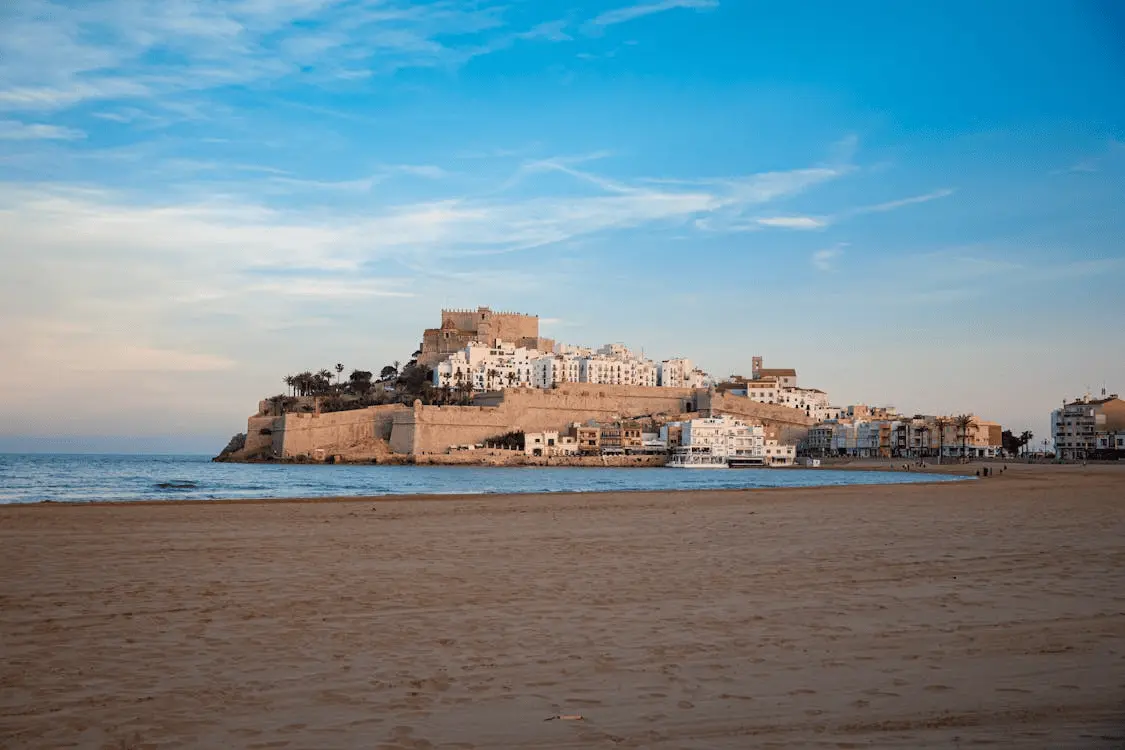
Peñíscola's castle is one of the most photogenic in Spain, and for a geographical reason: it sits on a rocky promontory surrounded by sea on three sides, connected to the mainland only by a narrow isthmus. The view from the north beach, with the castle outlined against the sky and the Mediterranean at its feet, is the image that appears on nearly every tourism poster of the Valencia region.
The current building was raised by the Knights Templar in the late 13th century over an earlier Arab fortress. When the Order of the Temple was dissolved in 1312, the castle passed to the Order of Montesa. A century later came the figure who would forever mark the history of the place.
Pedro de Luna, elected pope in Avignon in 1394 under the name Benedict XIII, was the last of the popes of the Western Schism to refuse to abdicate. After the Council of Constance (1415) deposed him and elected a new pontiff, Pedro de Luna withdrew to Peñíscola with a small retinue and continued to proclaim himself the legitimate pope until his death in 1423. He was 94. He has since been known as the Papa Luna, and the castle bears his name in popular memory.
Pedro de Luna governed his papacy from this castle for eight years, surrounded by sea, never acknowledging his deposition.
The old town
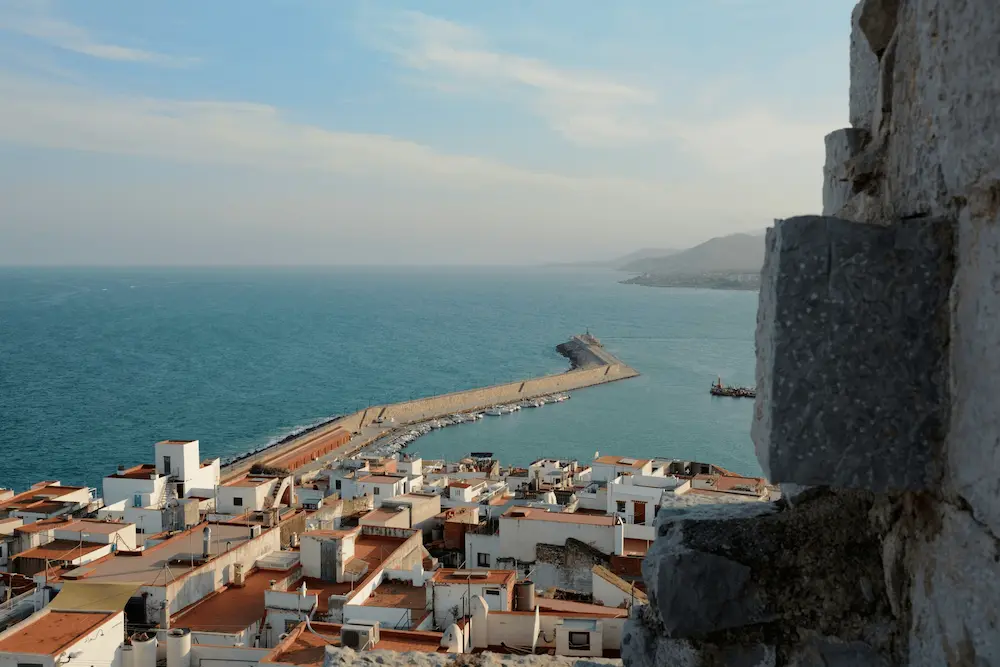
Inside the walls, Peñíscola's old town is a maze of narrow streets, whitewashed houses and corners with sea views. You can walk the whole thing in two hours at a leisurely pace. The scale is manageable and the layout invites you to get lost: every alley ends at some point with a view of the water or the rock.
The main points of interest besides the castle are the Church of Santa María (18th century, next to the castle), the Puerta Falsa (one of the original entrances to the walled city), the Bufador (a crack in the rock where the sea surges in on windy days) and the various viewpoints from the walls. The Peñíscola lighthouse, at the far end of the promontory, is accessible on foot from the castle.
The old town has many souvenir shops and restaurants geared to mass tourism, especially in summer. Out of season, some close and the atmosphere is completely different: residents on the terraces, empty streets in the morning, bars with a local crowd.
Beach and natural surroundings
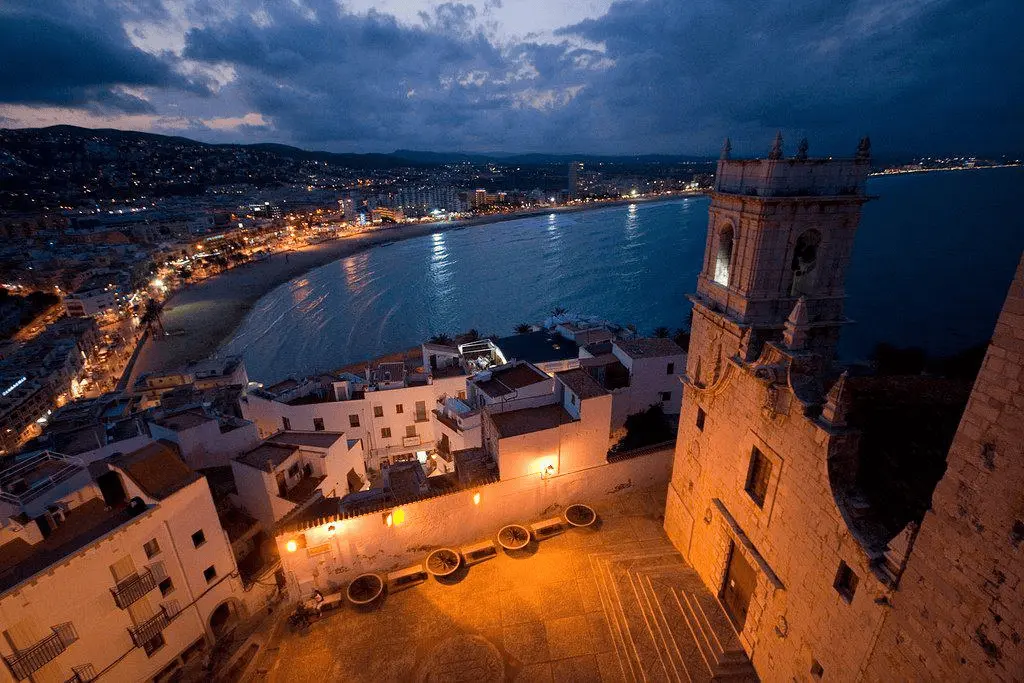
Peñíscola has two main beaches. North Beach (also called Playa de Peñíscola) stretches several kilometres north of the promontory: fine sand, calm water and the view of the castle in the background. In summer it has full services (sun loungers, lifeguards, showers). South Beach is smaller and sheltered, south of the isthmus.
South of Peñíscola, the Sierra de Irta offers a total contrast to the town's mass tourism: a 7,700-hectare coastal natural park with coves unreachable by car, paths through scrubland and cliffs, and virtually no facilities. It's one of the last stretches of undeveloped Mediterranean coast in the Valencia region. If you have time, it's worth a detour.
How to visit Peñíscola
The castle normally opens at 10 am (in high season it may be earlier). The visit takes between 45 minutes and an hour and a half depending on your pace. It's recommended to go first thing in the morning: from midday in mid-to-high season the queues can be long.
Parking in Peñíscola is paid and fills quickly in summer. The large car parks are outside the old town; from there it's a short walk to the city wall gate. In low season parking is easy.
From Onda, the fastest route is the AP-7 toll motorway to the Peñíscola-Benicarló exit. By the toll-free N-340 it takes about 20 minutes more. The total distance from Onda is about 95 km.
When to go
September and October are ideal: the sea is still warm, the castle queue is manageable and the old town restaurants have tables available. Spring (April–June) also works very well.
In July and August Peñíscola is a different place: packed, noisy, with high-season prices and a pressure on public space that makes the cultural visit considerably harder. If you go in summer, arrive before 9 am or wait until the afternoon to see the old town with slightly fewer people.
In winter (November to March) the castle and old town are practically deserted. Many businesses close, but those that stay open have a completely different atmosphere. It's the best time to see the Peñíscola that doesn't appear on the posters.