
A city that survived intact
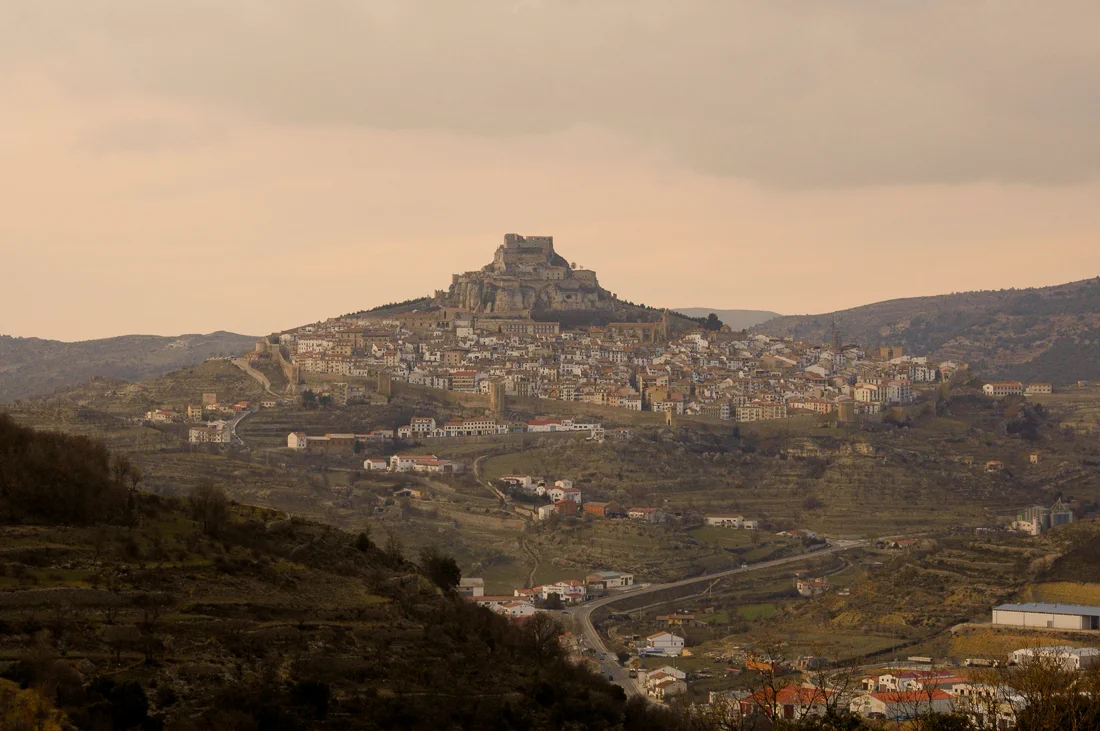
Morella has about 2,500 inhabitants and walls that are still standing since the Middle Ages. Not as ruins, not as a restored postcard: the walls of almost 2 km in perimeter encircle the old town almost completely, with their towers, medieval gates and walkways. Inside, the city functions: there are bars, shops, people living their lives. What makes Morella special is that time seems to have treated it well.
The historic core sits atop a rocky crag at 1,004 metres. At the very top, the castle. Below, in terraces, cobblestone streets, arches crossing the alleyways, the Gothic basilica, medieval palaces. The ensemble is declared a Site of Cultural Interest and is, without exaggeration, one of the best-preserved medieval towns in Spain.
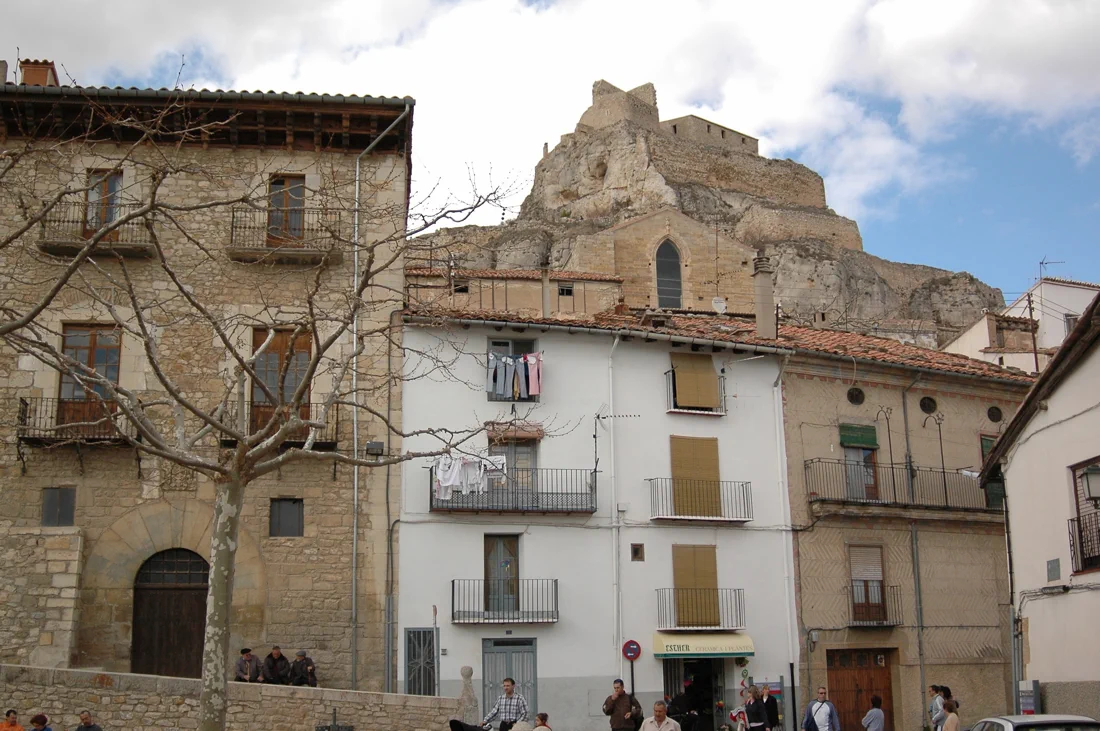
The castle
Entry to the castle costs around 4–5 euros and is worth every cent. The compound occupies the top of the crag and offers 360-degree views over Els Ports: the sierras, the ravines, small villages lost among the mountains. On a clear day, looking north from the summit, you can make out several municipalities in the province of Teruel.
Inside the compound there are remains of ancient buildings, though the ensemble has undergone numerous alterations over the centuries: it was bombarded during the War of Spanish Succession (1707), the Peninsular War (1808–14) and the Carlist Wars (particularly in 1838–1840).
Access climbs steeply from inside the town; take it at your own pace.
The castle offers 360-degree views over Els Ports. On a clear day you can make out villages in Teruel to the north.
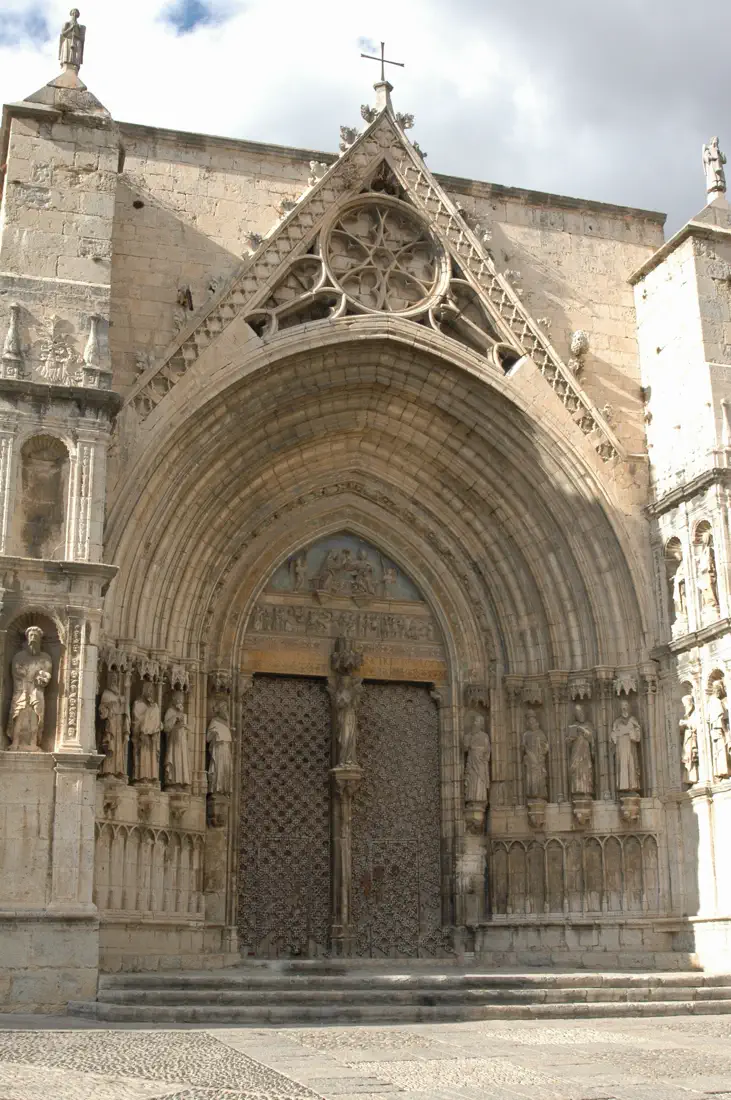
The Basilica of Santa María la Mayor
In the centre of the historic town, the Gothic basilica of Santa María la Mayor is Morella's most important building. Built between the 14th and 16th centuries, the result blends styles with a surprising coherence. The two portals on the facade (the Portal of the Apostles and the Portal of the Virgins) are exceptionally carved; the first, with its magnificent statue of Santa María, is the more elaborate.
Inside, the highlight is the suspended choir above the nave, from the 15th century and nearly flat, accessible by an elegantly carved stone spiral staircase with exquisite sculptural decoration. The basilica's acoustics are remarkable, especially when the impressive 18th-century organ sounds. Entry is modest (around 3 euros) and includes access to the small parish museum, housing numerous works of art and exquisite pieces of medieval goldsmithery.
Els Ports cuisine
The inland Castellón region has a larder that surprises. Morella is its finest showcase, and it's worth planning the visit with time to sit down for a proper meal.
Black truffle (Tuber melanosporum) is the region's star product. Els Ports is one of Spain's main producing areas, and in Morella's restaurants it appears in seasonal menus (mostly between November and March). It's not cheap, but this is the right place to try it without middlemen.
The Morella-style cured meats also have their own designation: the Easter longaniza sausage, the blanquet, the onion black pudding. Shops in the old town sell these products packaged to take home.
The dolços de Morella (marzipan, almond pastries, artisan nougat and, above all, the famous flaons) round off a food offering that makes the visit far more than a simple sightseeing stroll.
How to visit Morella
The historic town is entirely pedestrianised. Car parks are outside the walls, near the main gates (the Puerta de San Miguel and the Puerta de Forcall are the most accessible by car). From the car park to the centre is a short walk.
A comfortable day itinerary: arrive mid-morning, climb the castle before noon (fewer crowds and good light), have lunch at one of the restaurants in the old town, visit the basilica and wander the streets in the afternoon, and head back to Onda before dark. If you also want to see the walls from outside and walk around the crag, add an hour.
The weekly market is held on Sunday mornings in the main square (C/. Blasco de Alagón). If you time it right, it's a good chance to see the town in its everyday rhythm and buy local products directly.
When to go
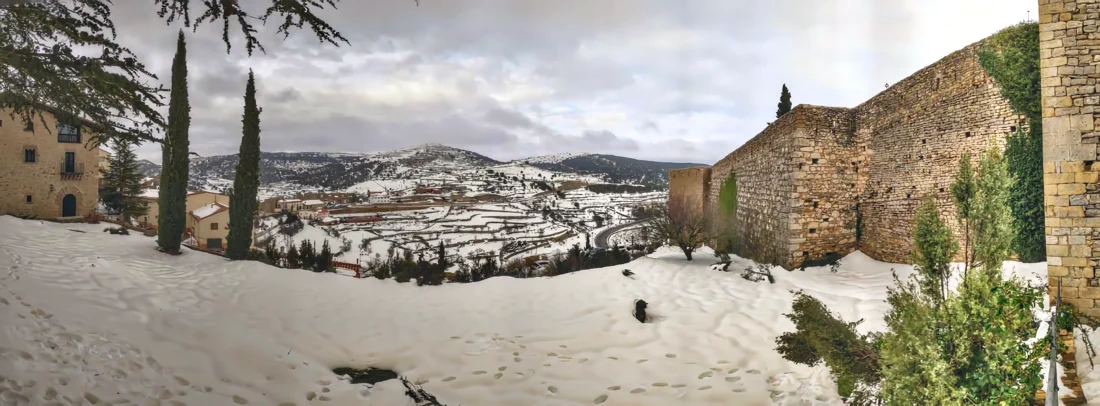
Morella works well at any time of year, but spring and autumn are ideal: pleasant temperatures, good light for photography and less crowding than in August. Winter is cold (above 1,000 metres) but the town under snow is spectacular.
In August the main town festivals take place, with bull events and all manner of performances. It draws large crowds and restaurant and accommodation prices rise. In September, the annual livestock fair takes place, established in 1239. The city's biggest event is the Sexenni, a religious and festive celebration held every six years: a week of parades and processions where the torneros dances are unparalleled, theatrical performances and events that fill the town to capacity.