
A village painted from the inside out
Fanzara has around 300 inhabitants, a square with a church and narrow streets like any inland village. Nothing prepares you for finding more than 160 murals signed by some of Europe's most recognised street artists. Yet since 2014, every available facade has become a canvas, the 19th-century public washhouse has interventions by international artists integrated into its structure, the school is covered right up to the roofline, and the alleyways lead you from one piece to the next without realising you have been walking for two hours.
The MIAU (Museo Inacabado de Arte Urbano, the Unfinished Museum of Urban Art) is what happens when a community decides it has more to gain by betting on art than on conflict. The name says it all: unfinished because the collection is never considered complete. New artists arrive every year, some earlier pieces are renewed or replaced, and the village keeps changing its skin.
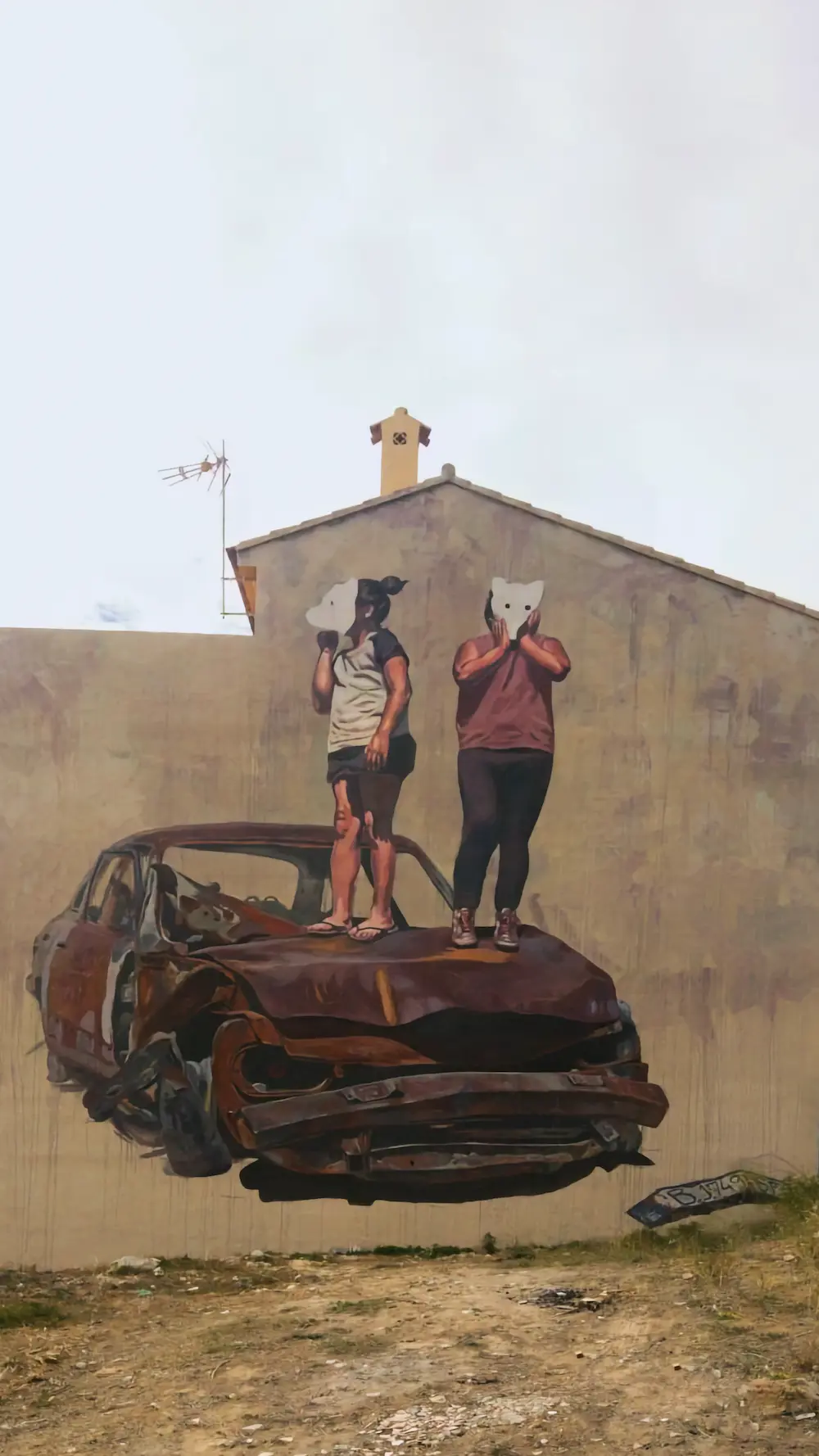
MIAU: Museo Inacabado de Arte Urbano. Unfinished because the village never stops painting. And yes, calling it MIAU does have a certain charm.
How it all started: the conflict, the division and the art
The story of MIAU does not begin with art. It begins with a proposal for a toxic waste treatment plant that came before Fanzara's town hall between 2005 and 2011. The plant split the village in two: those who wanted the jobs and those who rejected the risks to health and the environment. The confrontation dragged on so long that whole families stopped speaking, lifelong friendships broke down and daily life became impossible.
When the local government changed and the plant project was shelved, the new town council looked for a way to get people saying hello to each other again. They contacted illustrator Julián Arranz, a local resident, and muralist Miguel Abellán "Pincho". In September 2014, 21 artists arrived in Fanzara. They painted for several days. Neighbours who had been ignoring each other cooked together for the artists, opened up their courtyards and painted side by side. What the conflict had torn apart, art began to stitch back together.
The first MIAU edition was an experiment. Nobody expected it to become an international reference in street art, with coverage in outlets including The Guardian and the BBC, and a waiting list of artists from around the world wanting to leave their mark on its walls.
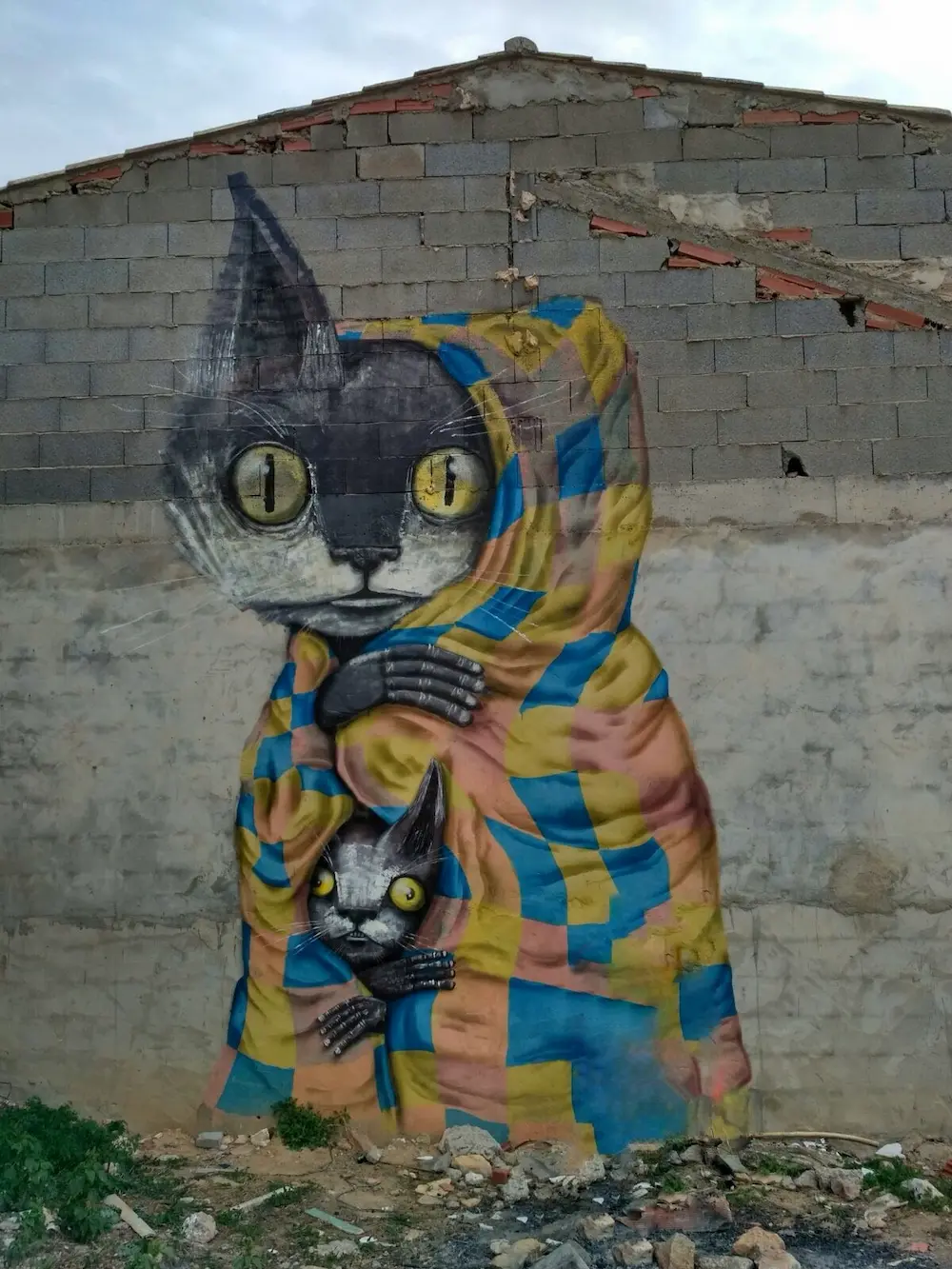
What to see: murals, artists and spaces
With more than 160 pieces spread across the village, exploring on your own is part of the plan. At the Consultorio MIAU on the Plaza de la Iglesia (Church Square), they hand out a map showing the location of every piece. Pick it up on arrival and take your time, because there are murals in interior courtyards, alleyways and corners that are easy to miss on a first pass.
The styles vary widely: large figurative murals covering entire facades, abstract and geometric works, trompe-l'oeil pieces, installations using physical materials and ceramic mosaics. Some names worth knowing before you arrive: Escif creates trompe-l'oeil works that seem to warp the walls or reveal what lies behind them; PichiAvo combines classical Greek sculpture with contemporary graffiti at facade scale; Axel Void paints monumental photorealist portraits that look you directly in the eye; Boa Mistura integrates typography and local resident involvement in the same process; and Julieta XLF covers entire facades with hybrid creatures in saturated colours. Not all the murals you see in photos are still there: the festival adds new pieces each year and some earlier ones are renewed, which makes every visit different from the last.
Beyond the murals, there are other points of interest in the village: the Castellet de Mazerol, an Arab castle on the hilltop visible from the square, the 19th-century public washhouse with artistic interventions integrated into its structure, and the church of the Assumption on the main square. A few minutes by car are the Millars river pools, one of the most popular inland swimming spots in Castellón in summer.
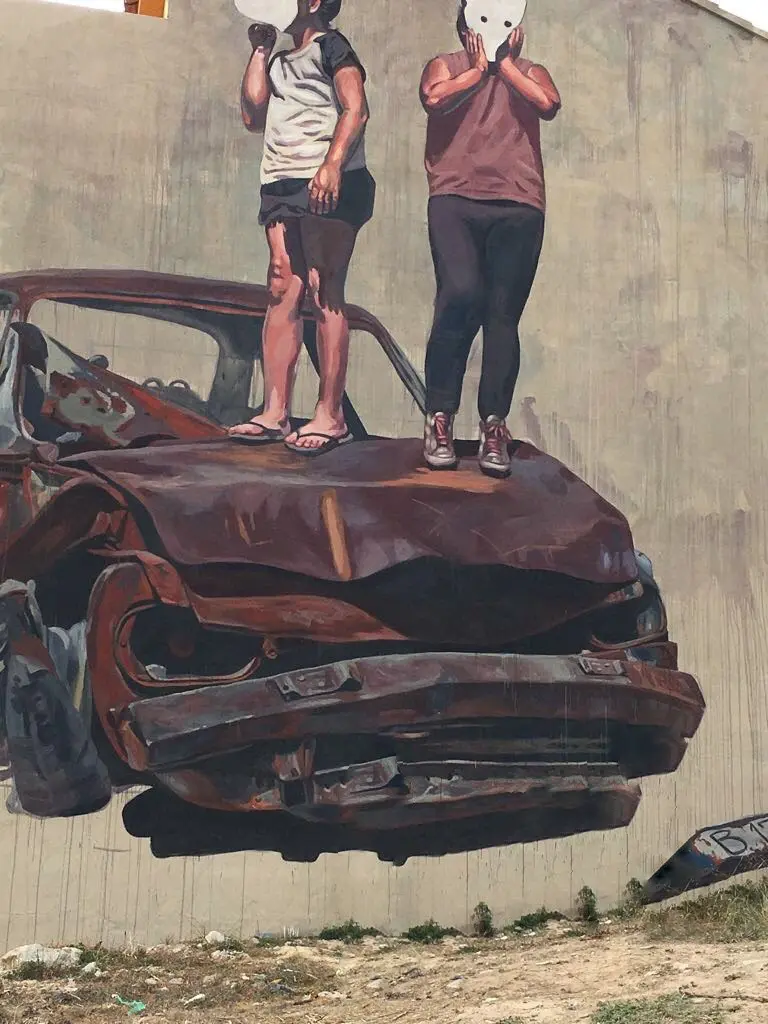
The MIAU festival: first weekend of July
MIAU can be visited all year round, but once a year the village transforms completely. The annual festival takes place the first weekend of July, Thursday to Sunday (in 2026, 2–5 July), and that is when artists arrive to work in public. Facades are painted in front of whoever happens to walk past, there are concerts, theatre and talks, and the artists stay in the homes of local residents. Very few festivals in the world operate quite like this.
The festival atmosphere is completely different from a regular visit: the village is in full swing, artists are working in the street and the creative process is as interesting as the result. If you can time it right, it is worth planning around. The 2025 edition was the ninth, organised with self-funding after grants from the Diputación and the Generalitat disappeared entirely. The artists and residents made it happen anyway. That attitude is part of the spirit of MIAU.
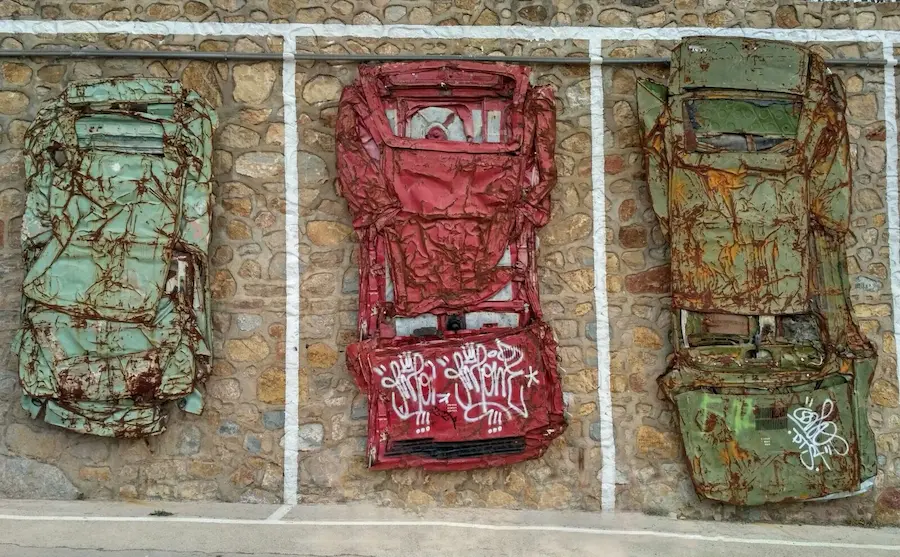
How to visit MIAU
The museum is in the street. There is no ticket booth, no opening hours, no entrance fee. You can arrive any day of the year at any time and explore the murals at your own pace. The only reference point is the Consultorio MIAU on the Plaza de la Iglesia, where they have maps showing all the pieces and a small merchandise shop for the project.
If you prefer a guided tour, these run on Sundays at 11:00 with a guide who explains the history of MIAU, the origin of each piece and the context behind the artists. The price is €10 for adults and €5 for children under 12. For groups of more than 20 people, weekday visits can be booked by writing to [email protected].
Allow at least two hours for a comfortable visit. If you want to see the whole village in detail, including the interior courtyards and the less obvious corners, three hours or more. There is parking at the entrances to the village; the historic centre is pedestrianised but reachable on foot from the car parks in a few minutes.
Outside the festival the village is quiet and the murals are there just the same. In many ways it's better: no crowds, you can stand in front of each piece without being jostled. Early morning or late afternoon light is best for photography. Any month of the year works.
Where to eat in Fanzara
The village has two bars: Bar d'Abajo and Bar Los Ojales, straightforward local cooking with no pretensions, which is exactly what suits a place like this. Panadería del Quimi is worth a stop even if just to pick something up. If you want to sit down to a proper meal with more options, Onda is 11 km away.